A tour of the rooms of the Museu del Renaixement, the works on display and key themes
Walk through the museum rooms
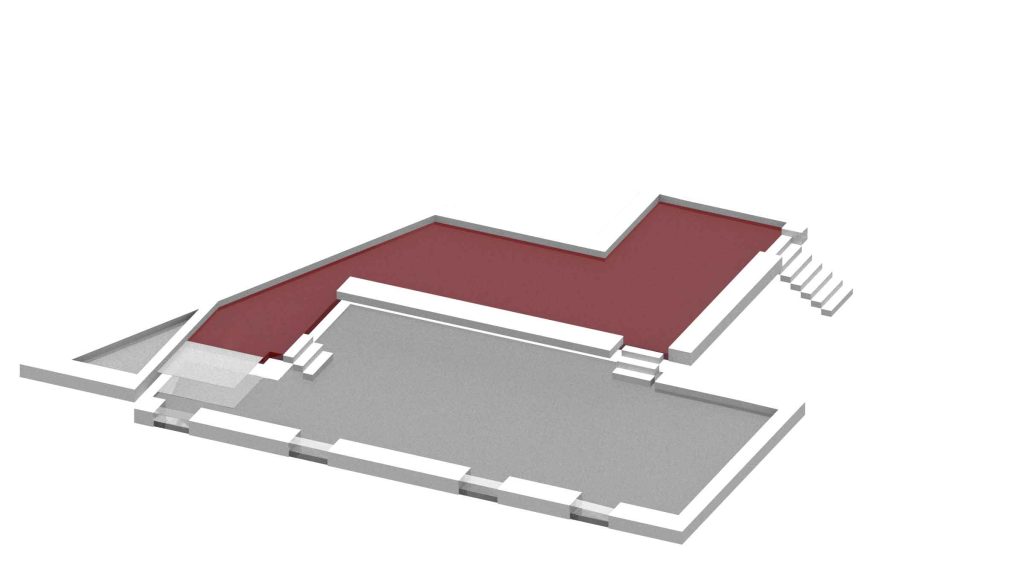
The story of the museum revolves around three key themes on each of the three floors: the history of the Requesens family in Molins de Rei, the principal characteristics of Renaissance art, and everyday life in the 16th century.
Renaissance objects and works of art provide an insight into what everyday life was like at the time. Beyond their beauty and their aesthetic and historical value, they are great sources of knowledge of a world that no longer exists, but that can be understood by looking at the interrelationships between different things.
The 16th century was a time of great discoveries, outstanding personalities in various fields, fabulous works of art and inventions, but it was also marked by problems and conflict.
Under the name of the Master of the Parrot, art historians have identified the hand of a Flemish painter, active in Antwerp in the early 16th century, who often included this exotic bird in some of the works attributed to him. In this painting, we can appreciate his skill in depicting objects and textures in great detail, within an intimate and close setting. It is a highly successful formula for representing Mary Magdalene as a young woman of great beauty.
.
Spain or Italy
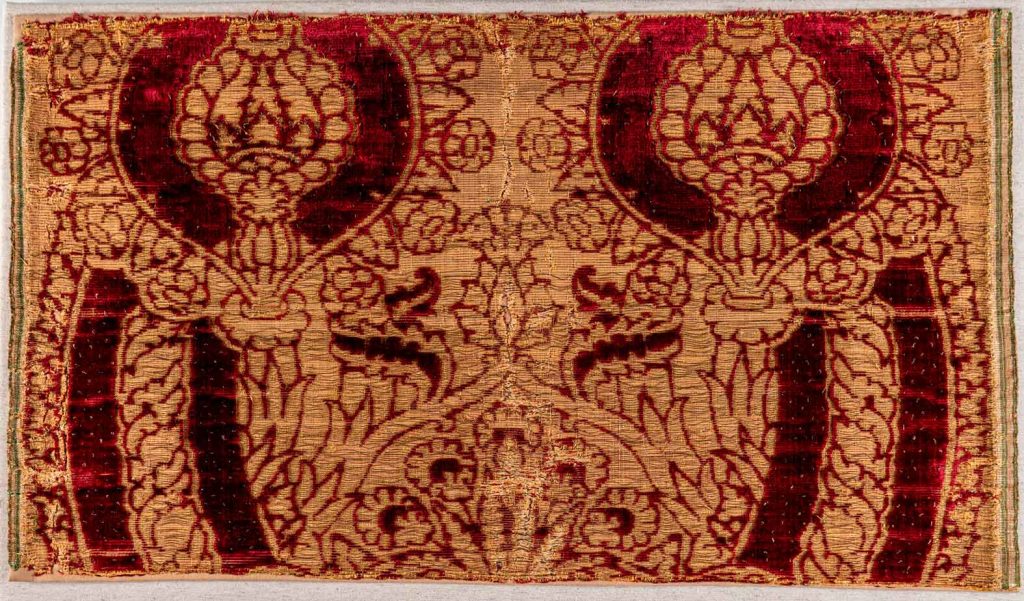
Velvet, 15th-16th century, velvet work with twisted gold thread wound around a core of silk yarn Terrassa Textile Museum, Ricard Viñas Geis collection N.R. 3989-2
This velvet work features twisted gold thread wound around a core of silk yarn. The cut velvet technique is combined with velluto alluciolato, or “firefly velvet” in a symmetrical composition of great beauty. It is not known whether its origin is Hispanic or Italian, but is certainly an excellent example of the richness and quality of the fabrics of the Renaissance period.
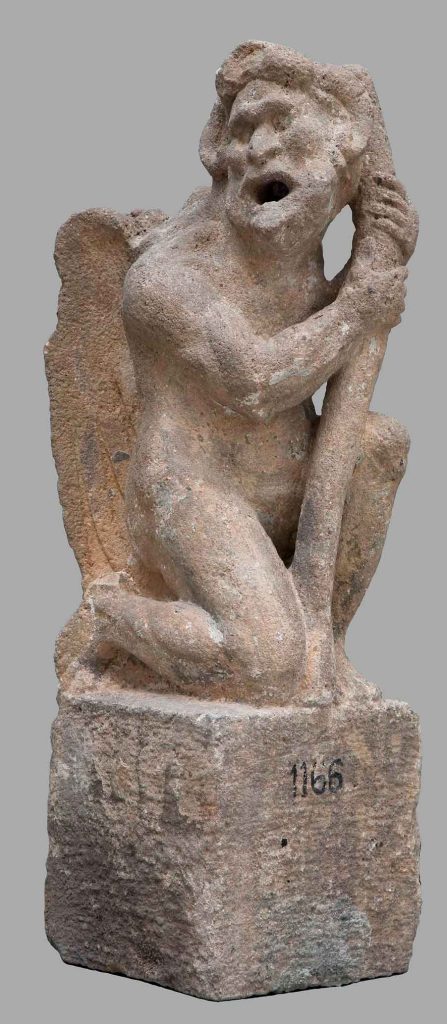
The general studies were institutions dedicated to higher education, similar to modern universities. Those in Barcelona, which originated in the 15th century, had a new building from 1536, located in the upper part of La Rambla. Charles V attended the beginning of its construction and greatly supported its development. The building disappeared in the 19th century, but it left its mark on the city’s street names (Rambla dels Estudis) and in this magnificent work by Tomàs Barça. Water was channeled along the demon’s back, between the wings, and flowed out through its wide-open mouth.
.
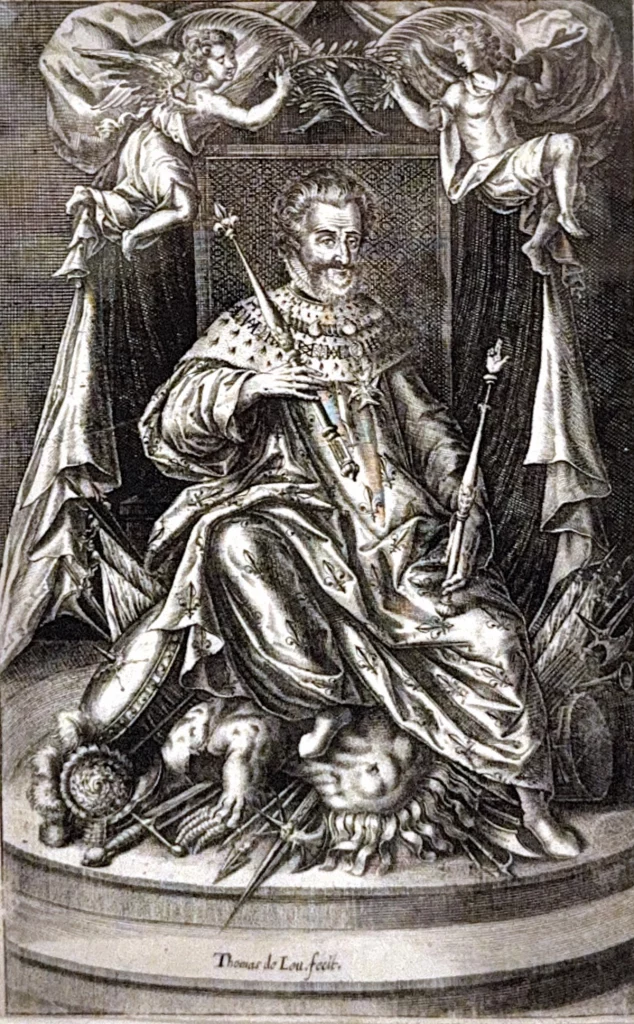
Thomas Leu
Henry IV, King of France, c. 1595, engraving
Museu de Lleida – Antoni Gelonch Deposit
GE-840
This French engraver of Flemish origin produced around 300 portraits of various notable figures of his time. In this one, King Henry IV of France (1553–1610) is shown seated on his throne, dressed in regal attire and holding the sceptre and staff of command, while two putti crown him with laurel, a symbol of his power. putti el coronen amb llorer, com a símbol del seu poder.
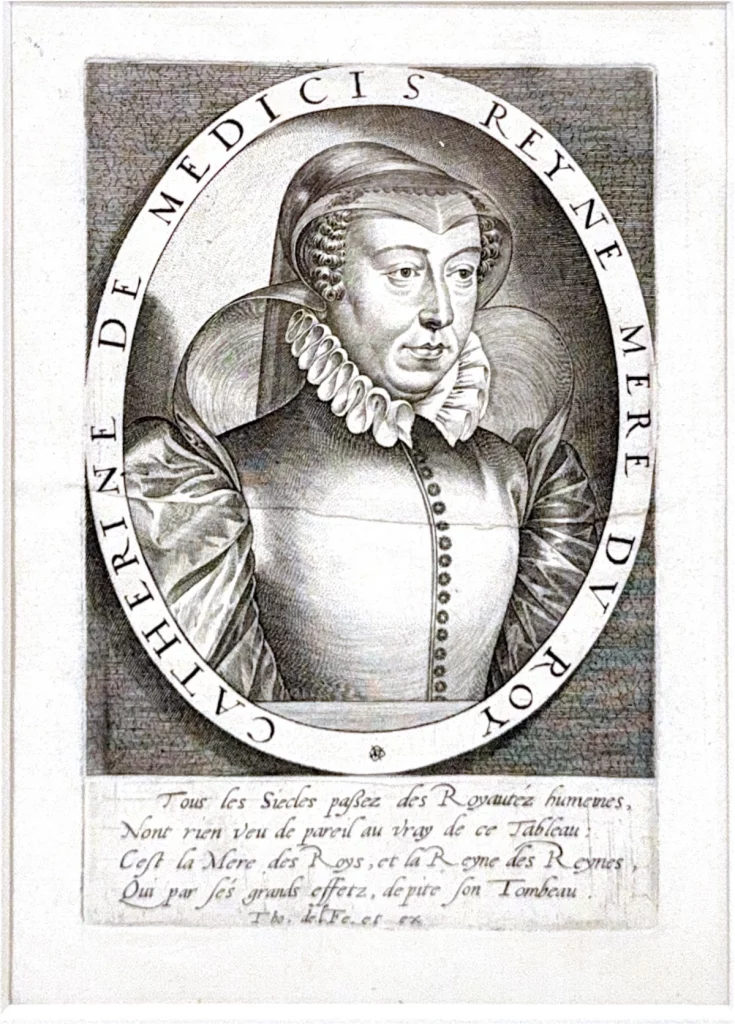
Thomas Leu
Caterina de Mèdici, c. 1595, engraving
Museu de Lleida – Antoni Gelonch Deposit
GE-841
Catherine de’ Medici (1519–1589), wife of King Henry II of France, was a key figure in the French monarchy. She served twice as regent of the kingdom, during which her political skill proved decisive. A highly cultured woman and art lover, she was an important patron of the arts—particularly in painting, music, and above all, architecture.
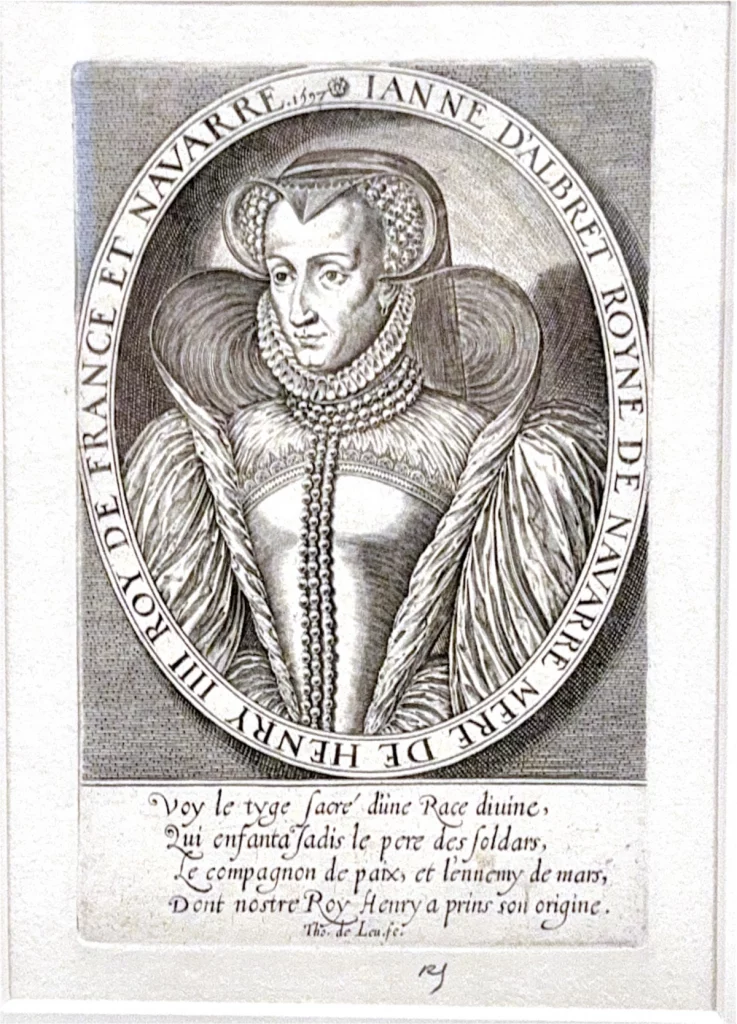
Thomas Leu
Jeanne d’Albret, Queen of Navarre, c. 1595, engraving
Museu de Lleida – Antoni Gelonch Deposit
GE-842
Jeanne d’Albret (1528–1572) was Queen of Navarre under the name Jeanne III and the mother of Henry IV, the first Bourbon king of France. Educated as a Catholic, she later converted to Calvinism and introduced the Protestant Reformation in Navarre, for which she was eventually excommunicated by the Pope. In 1571 she commissioned the first translation of the New Testament into Basque.
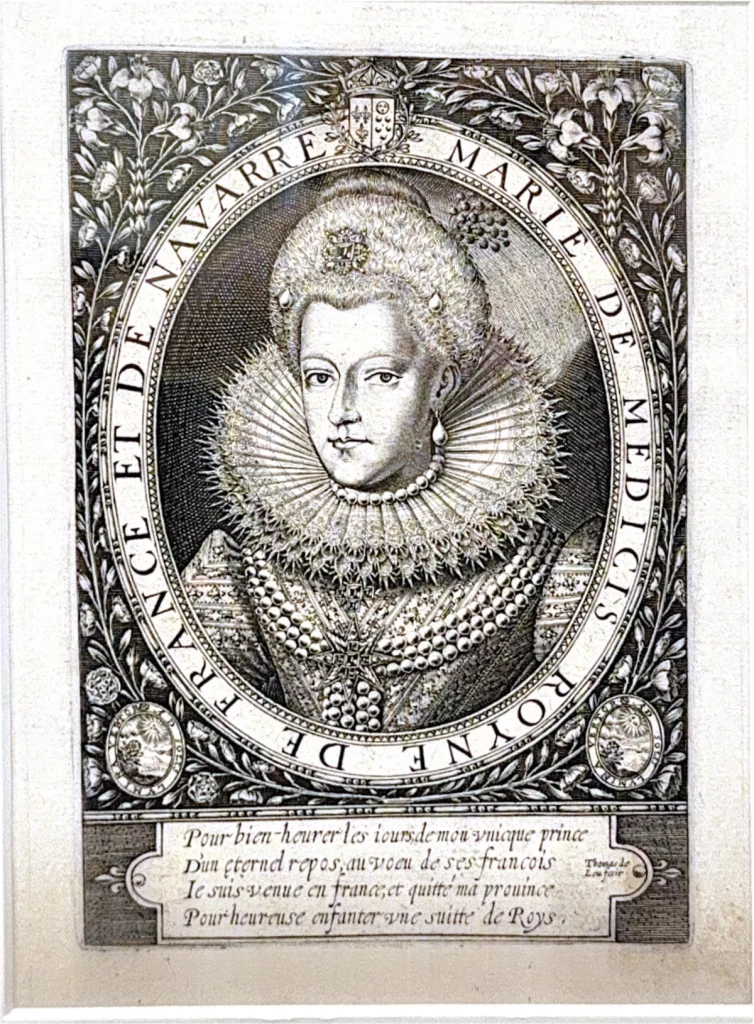
Thomas Leu
Maria de’ Medici, c. 1595, engraving
Museu de Lleida – Antoni Gelonch Deposit
GE-843
Maria de’ Medici (1575–1642) was Queen Consort of France and Navarre, as indicated in the oval frame of the portrait. An educated and cultivated woman, she was an avid art collector and patron of artists such as Guido Reni and Rubens. In this engraving, Leu demonstrates his great talent as a draftsman and his mastery of the line to achieve delicate effects in detail and texture.
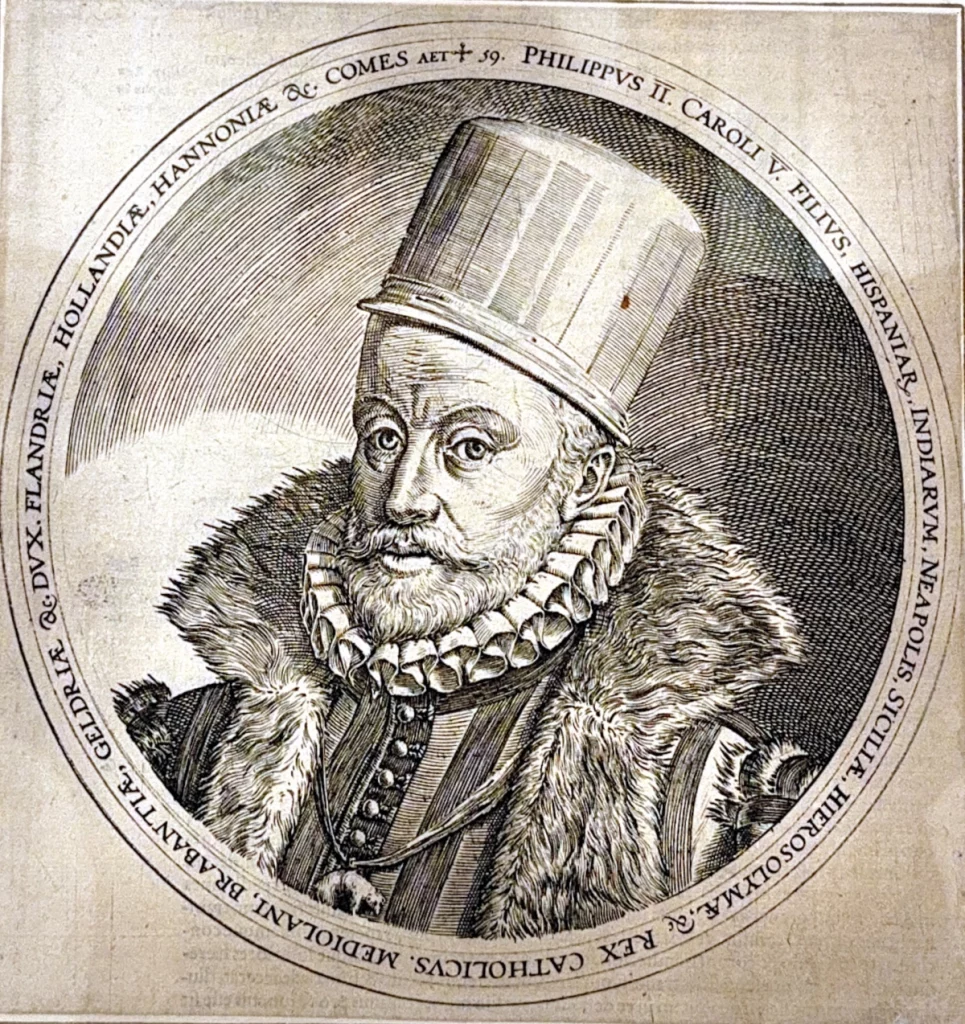
Anonymous
Philip II, c. 1590, engraving
Museu de Lleida – Antoni Gelonch Deposit
GE-814
King Philip II (1527–1598) is depicted here at an advanced age—probably in his sixties—within a circular medallion bearing an inscription that identifies him as ruler of all the territories held by the Spanish crown at the time. He wears the collar of the Order of the Golden Fleece and a high-crowned hat. It is worth noting that in 1532, when he was still prince, Philip stayed at the Palace of Requesens in Molins de Rei on his way to Barcelona.
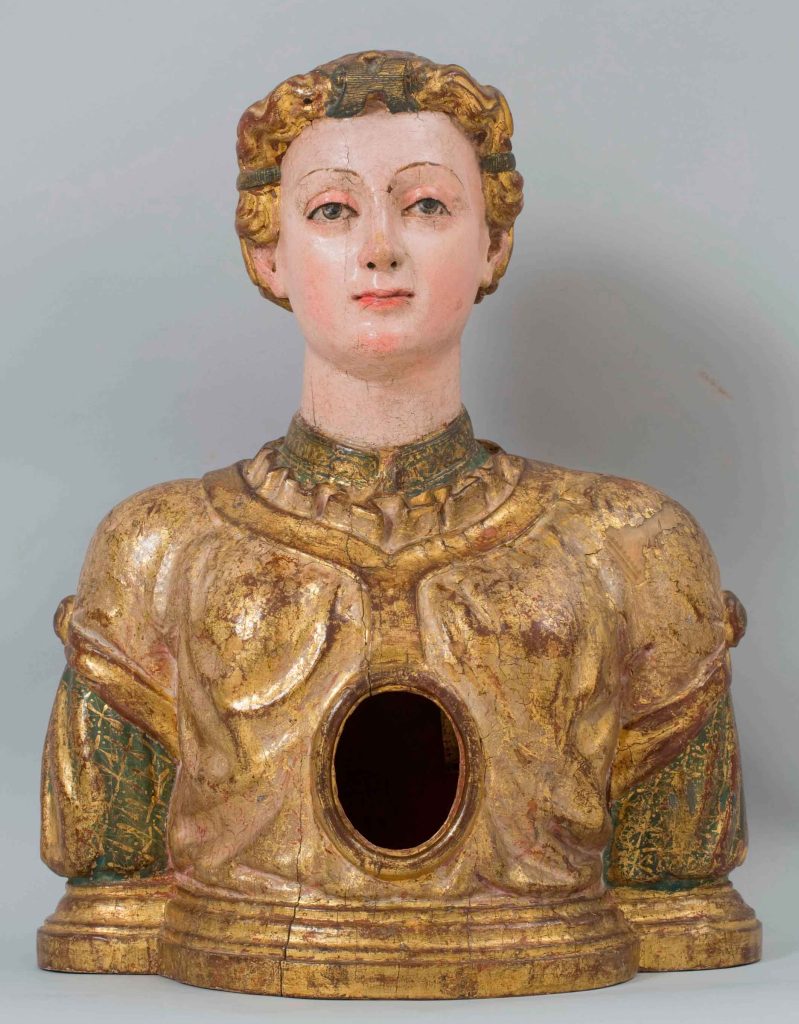
The identity of the saint is unknown, as is the geographical provenance of the piece and its original location. However, this was a very common way of storing and displaying relics of saints which could be viewed through a small window. The bust, which is almost life-size, is made of gilded polychromed wood. Of particular note are the red-painted doorway to access the interior from the back, the hairstyle and the subtle smile on her face.
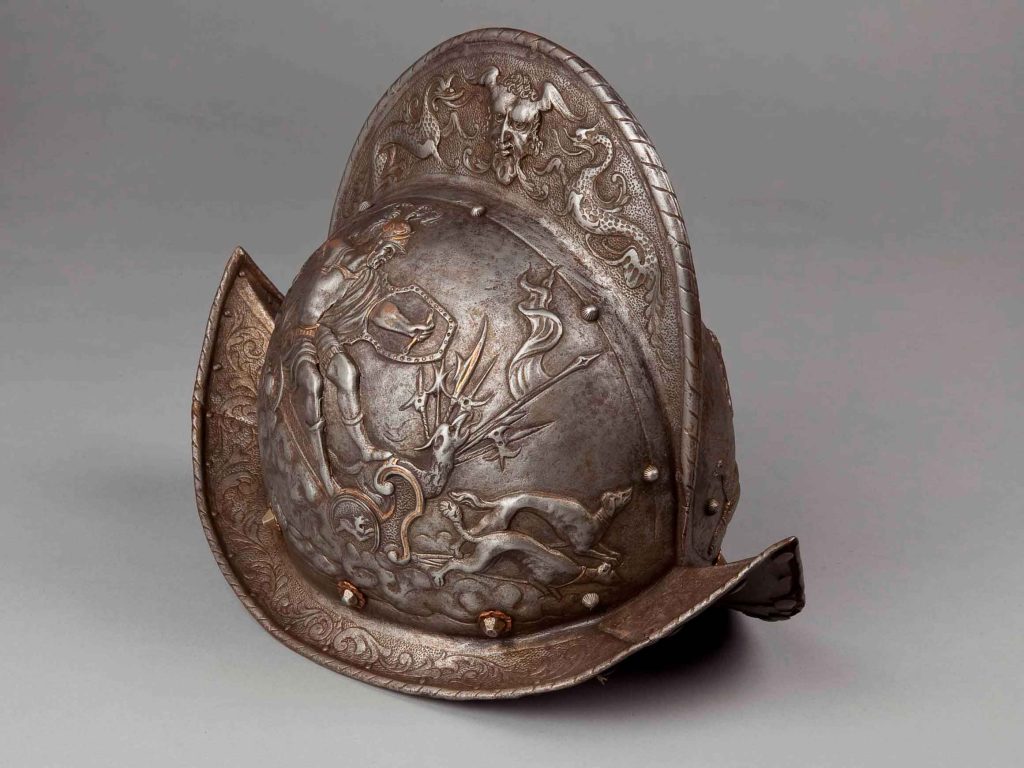
Aquest tipus de casc va ser molt popular als exèrcits al segle XVI, sobretot els hispànics. Amb les seves formes característicament corbades, protegia amb molta efectivitat les parts més exposades del rostre, com el nas i les orelles, però també les més vitals, com el coll i el crani, amb una cresta que també podia ser esmolada. Aquest casc en concret devia pertànyer, sens dubte, a un alt càrrec militar, per la rica decoració en relleu, refinada, de tipus classicista i de temàtica mitològica, amb la trobada de Mart i Venus, els déus romans de la guerra i de l’amor.
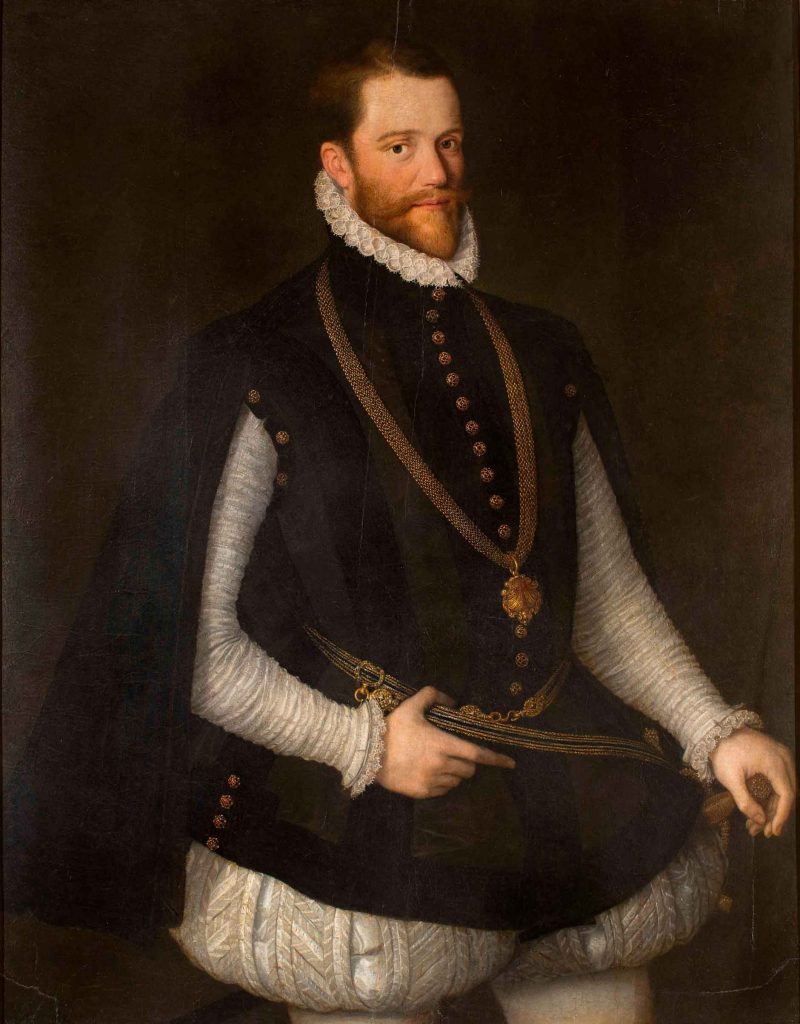
Anthonis Mor, or Antonio Moro (Utrecht, around 1517 - Antwerp, 1577), was a painter and portraitist of great prestige in Europe. We know that he painted portraits of various members of the Habsburg court, including Charles V in 1552, Mary Tudor in 1554 and Philip II in 1560. The identity of the man depicted in this magnificent painting is unknown, but the collar he wears tells us that he belonged to the Order of St. James. It shows a mature man, with a bearing and a gaze that suggest great confidence, emphasised by the position of his hands, his belt and the hilt of his sword.
.
Anon. Madrid.
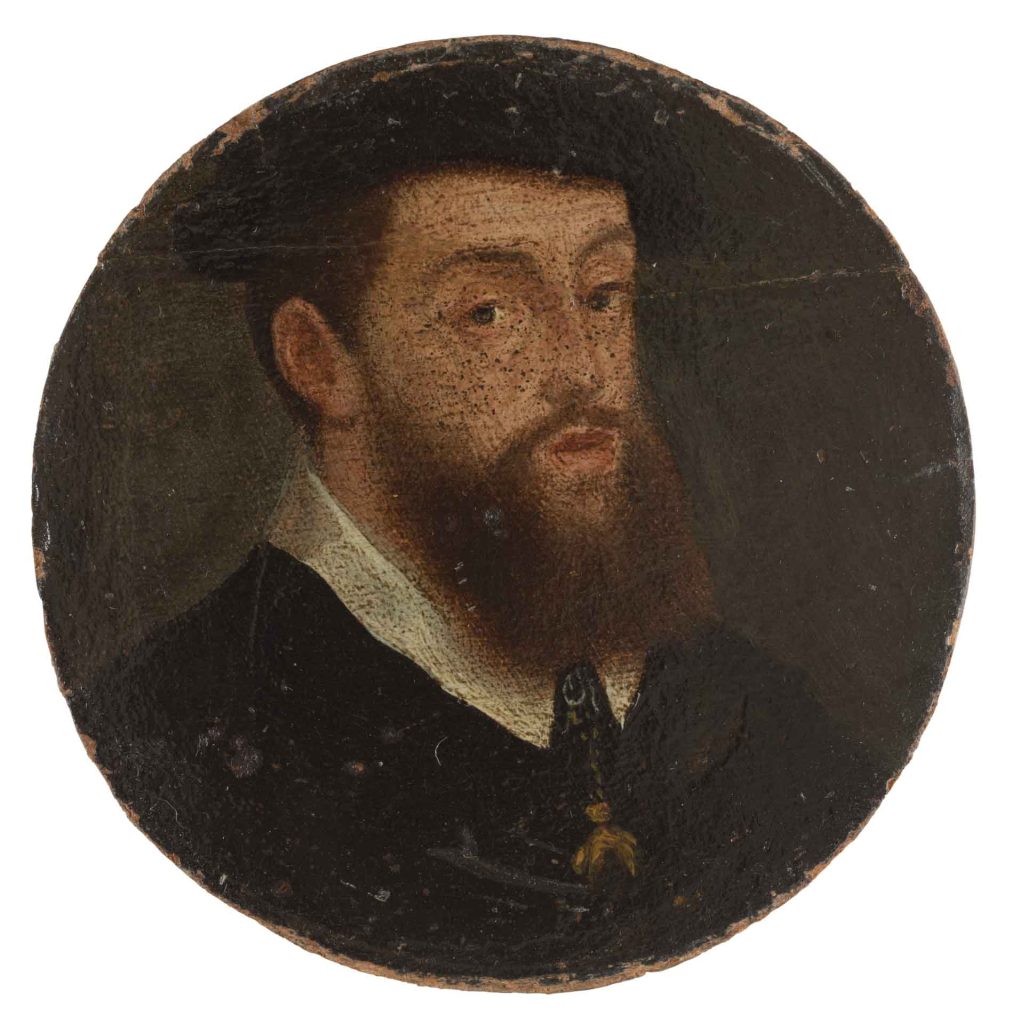
The Emperor Charles V, oil on panel, later than 1540 Reserve of the Museo Nacional del Prado P002705
There is no certainty as to who the artist was, or when this small portrait of the emperor was painted. The small, round format suggests that it was created in an intimate and very private setting. These portraits were sometimes sent to family and friends to give an idea of the status and appearance of the sitter. Charles V is dressed in the Spanish fashion of the time, and the only ornament he wears is the Distinguished Order of the Golden Fleece that he wears around his neck. It seems likely that it was painted in Spain, where this type of small portrait was very popular.
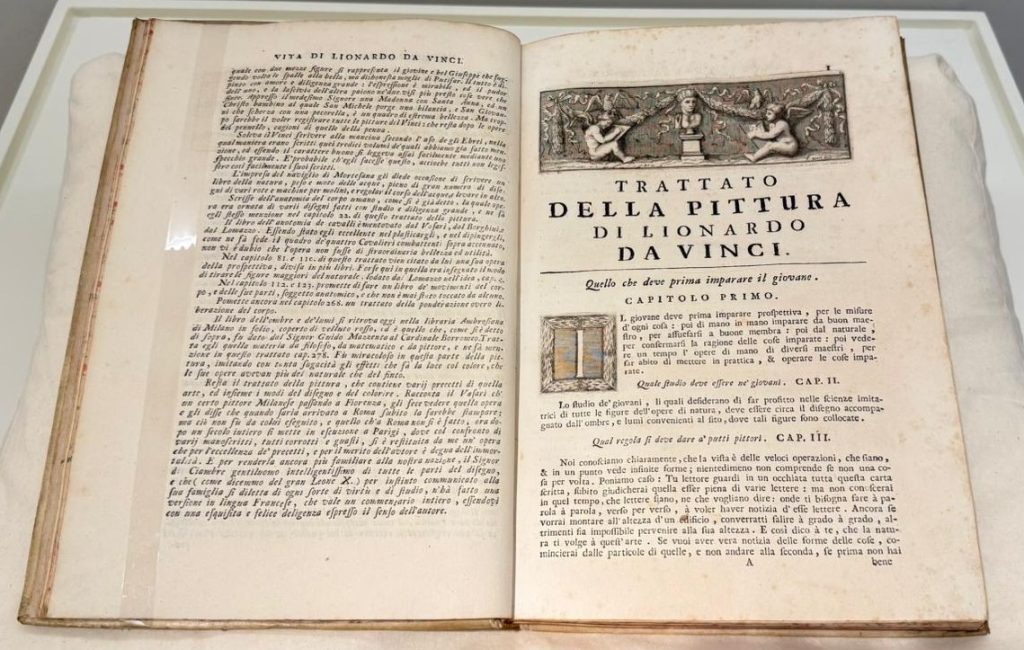
Leonardo da Vinci
A Treatise on Painting, Naples, Francesco Ricciardo, 1733
Rare Book and Manuscript CRAI Library
University of Barcelona
This treatise brings together much of Leonardo da Vinci’s thoughts on the art of painting, which he saw as a science that artists should study and refine. It consists of scattered notes that the Florentine genius wrote throughout his life and which, after his death, were published thanks to a compilation by one of his disciples. In it, Leonardo emphasized the importance of observation as a fundamental source of knowledge, since sight is the most important sense that allows humans to understand the world and gives them the tools to depict it in
their art.
.
Manises (Valencia)
Plate, last quarter of the 15th century - first quarter of the 16th century, clay, earthenware Commodate from the DHub Design Museum Legacy, Par Espina MCB 100.638
La ciutat de Manises, a València, fou un importantíssim centre productor de ceràmica de gran qualitat, ja des del segle XIV. Al segle XVI va viure una època de gran esplendor, amb peces com aquesta, que s’anomenaven també “producte de València”, i que lluïen decoració geomètrica amb uns característics reflexos en tons daurats i blaus. La mare d’Estefania de Requesens, Hipòlita Roís de Liori, era valenciana d’origen, i tenim constància documental que en més d’una ocasió havia fet comprar ceràmica de la seva terra per a algun dels seus palaus.
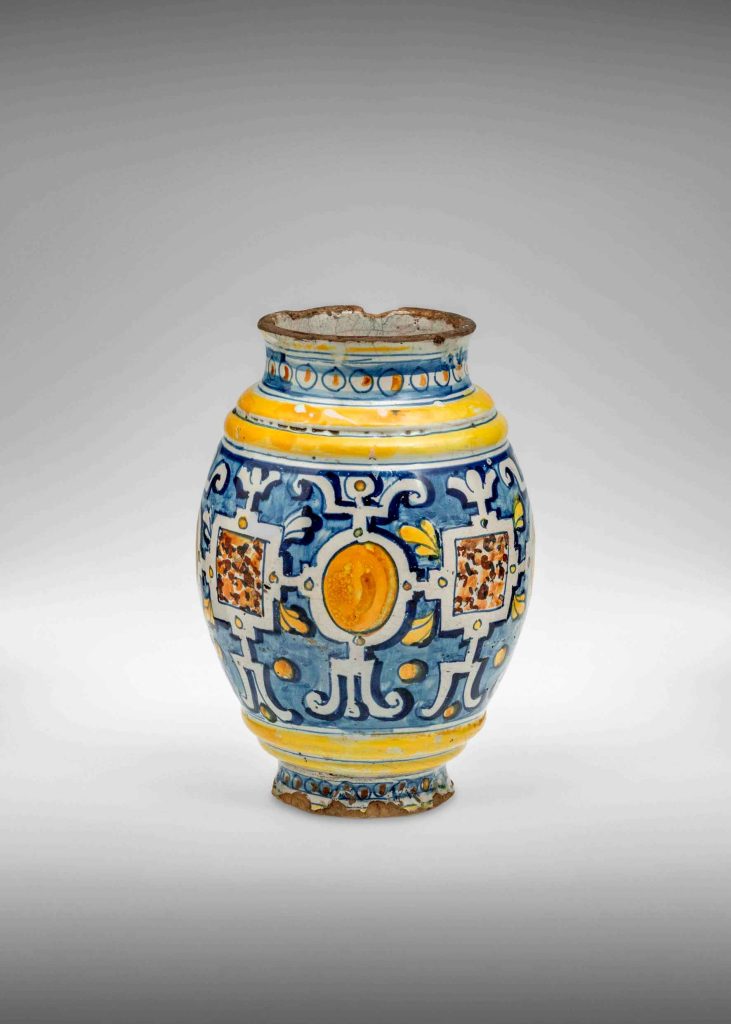
Talavera de la Reina (Castilla La Mancha)
Jug, 16th century, earthenware Commodate from the DHub Design Museum MCB 3.959
Fins al segle XVI, la ceràmica espanyola va estar molt influenciada per la tradició àrab. Talavera de la Reina va ser un dels centres productors més importants de l’època. Citada sovint per autors com Cervantes, Lope de Vega o Tirso de Molina, gaudia de gran prestigi però era d’ús habitual també entre les classes humils. Aquest exemple llueix una decoració característica, amb els colors blancs i blaus que la fan molt fàcilment identificable.
.
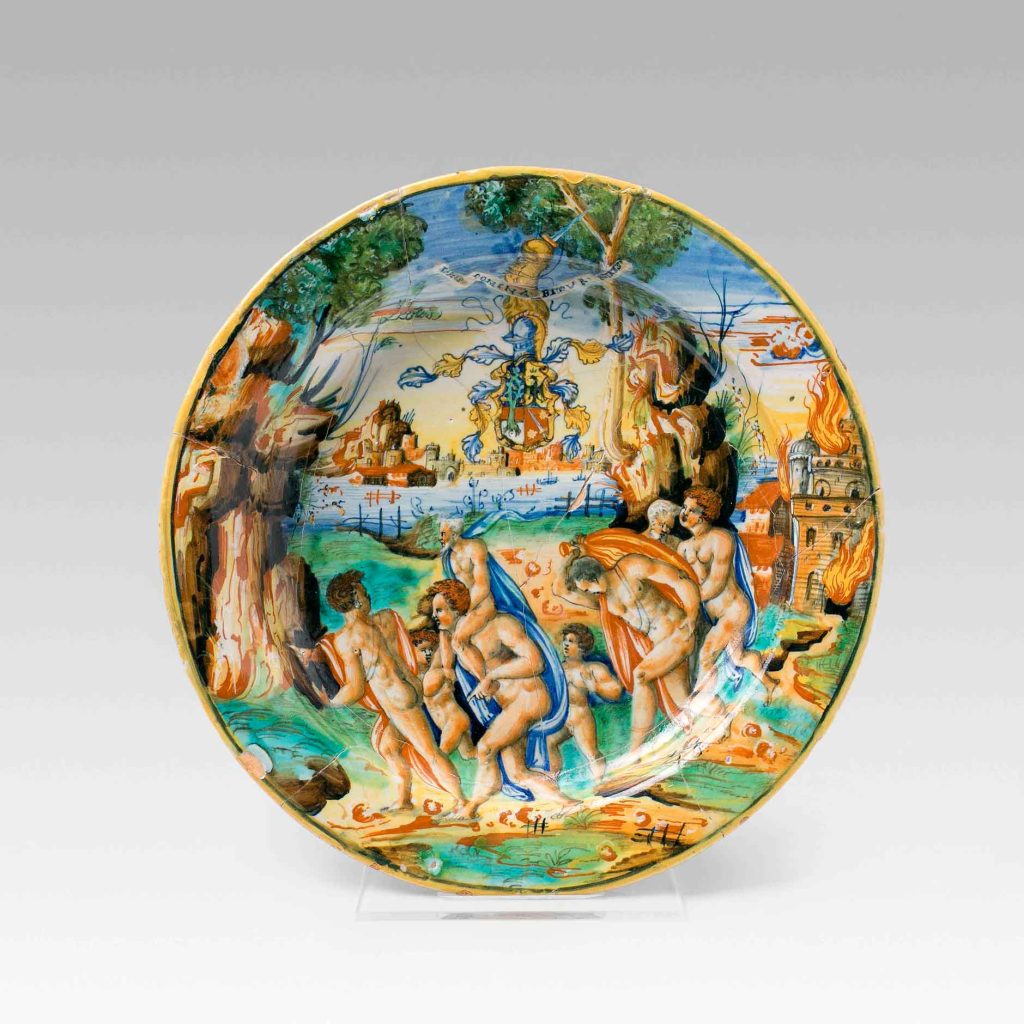
Andrea Negroponte (Italy)
Plate, C. 1550, earthenware Commodate from the DHub Design Museum MCB 50.429
Andrea Negroponte was renowned Italian ceramicist, who produced a large body of work that can now be seen in various museums around the world. This plate shows a scene from the mythical fire that destroyed the city of Troy. We can see Aeneas fleeing the city with his father Anchises on his back, together with other characters depicted in a naturalistic style typical of the Italian Renaissance, that incorporated discoveries and techniques from the language of painting, such as perspective and the creation of depth in landscapes, into ceramic decoration.
Al segle XVI Barcelona era un important centre productor i receptor de manufactures metàl·liques. Sabem, gràcies als inventaris, que els elements de tipus metàl·lic eren molt abundants a les cases, amb diversos usos i finalitats. Les bacines, per exemple, podien servir com a grans safates, servidores o rentamans en els àmbits domèstic i litúrgic, però, al mateix temps, si es foradaven (com en aquest cas), es podien fer servir com a làmpades penjades del sostre, amb una alta capacitat per difondre la llum de les espelmes.
.
Catalonia
Goblets, between 1590-1630, glass Commodate from the DHub Design Museum Legacy, Emili Cabot i Rovira MADB 23.381, MADB 23.294, MADB 23.588
Sabem que, en una de les cartes d’Estefania de Requesens, va demanar a la seva mare, Hipòlita Roís de Liori, que li fes fer a Barcelona, amb destí a la cort, una dotzena de fines copes de vidre per a l’emperador i l’emperadriu. Al segle XVI, la Ciutat Comtal va ser un important centre productor de vidre de gran qualitat i refinament. Aquestes tres copes, de formes delicades, tenen una decoració característica en fils blancs que s’anomena lacticini, per la seva semblança a la llet.
Italy
Box, C1500, poplar wood, plaster and iron Commodate from the DHub Design Museum Legacy, Martí Estany MADB 37.970
Aquestes capses o arquetes són un model de gran èxit a la Itàlia dels segles XV i XVI. Es podien regalar com a obsequi de prometatge o de noces, però també en altres ocasions. Per la seva rica decoració feta amb pastiglia (a mixture of plaster, marble dust and glue), they were considered luxury objects, intended for storing small precious and often valuable objects. Here, the decoration is an example of feminine virtue: we see Artemis bathing naked in the forest, but when Actaeon discovers her, she turns him into a stag and commands her dogs to kill him.
.
Europe
Watch, 16th century, steel and copper Commodate from the DHub Design Museum Legacy, Martí Estany MADB 38.857
Al segle XVI es van inventar i construir, a Alemanya, els primers rellotges portàtils de butxaca. L’ambició de l’home de poder controlar el temps en qualsevol lloc i moment va afavorir el perfeccionament d’aquestes primeres mostres de gran enginy, que tenien gairebé l’aspecte de joies. Aquests dos exemplars provenen de la col·lecció Martí Estany, un gran col·leccionista que tenia la residència d’estiu, precisament, a Molins de Rei. Aquesta forma de llibre pot fer al·lusió als llibres d’hores, tan usats en la societat de l’època del Renaixement.
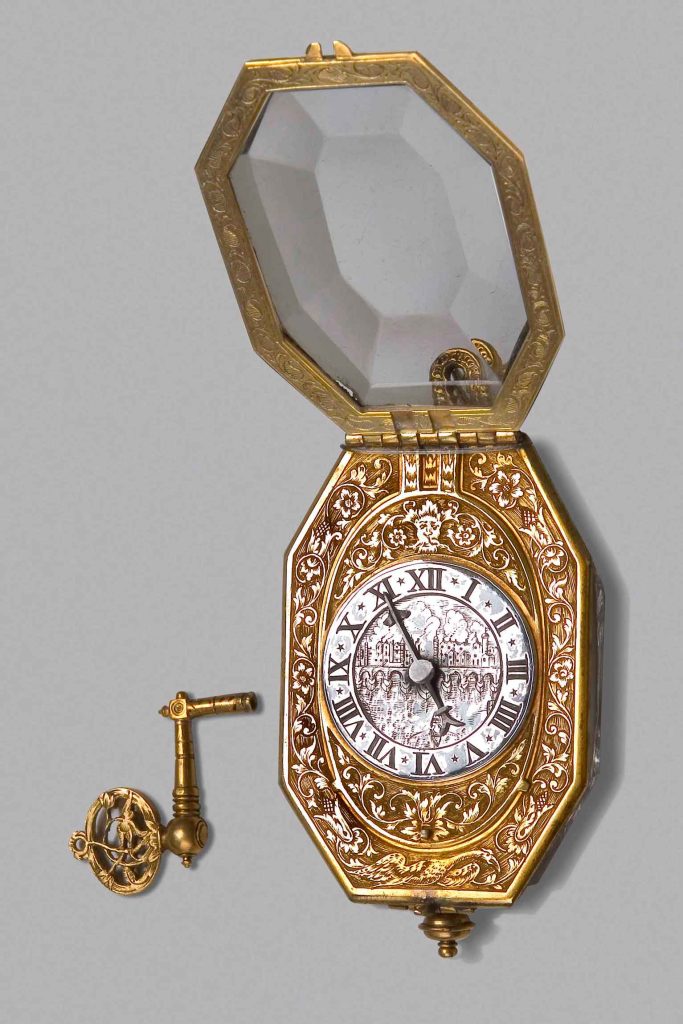
Jo. Nylow (Europa)
Watch, second half of the 16th century, quartz crystal, silver, steel and copper Commodate from the DHub Design Museum Legacy, Martí Estany MADB 38.809
This other example, also from the Martí Estany collection, allows an appreciation of the value that these early pocket watches could have as pieces of jewellery, In this case through the use of rock crystal on the cover and the back. The dial shows an intriguing maritime or river scene; a bridge with a city in the background, and a boat rowing towards it, clearly identifiable.
.
Catalonia
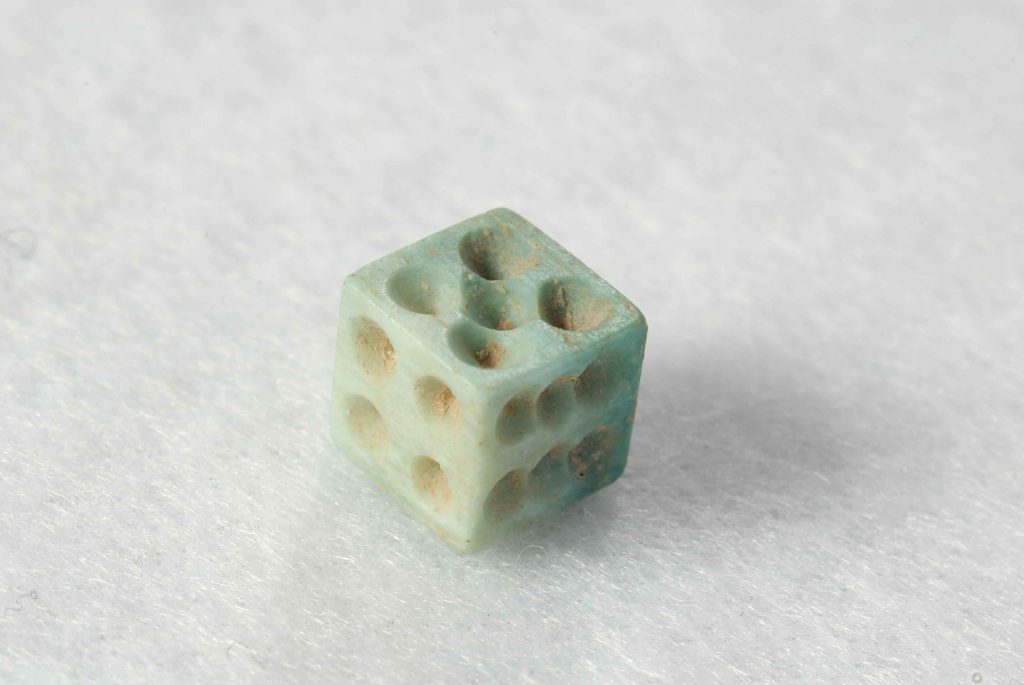
Dice, bone, 16th century Barcelona History Museum MHCB 3023
El joc i les apostes eren molt habituals en la vida quotidiana al segle XVI, i generaven una infinitat de problemes, per les baralles i altres situacions i delictes que hi anaven associats. Aquest dau, fet amb os, és un objecte quotidià senzill, però ens parla d’alguns costums de l’època que han deixat un rastre molt extens i detallat en la documentació amb la promulgació de lleis, prohibicions i sancions, per motius d’ordre públic però també de problemes i denúncies entre particulars.
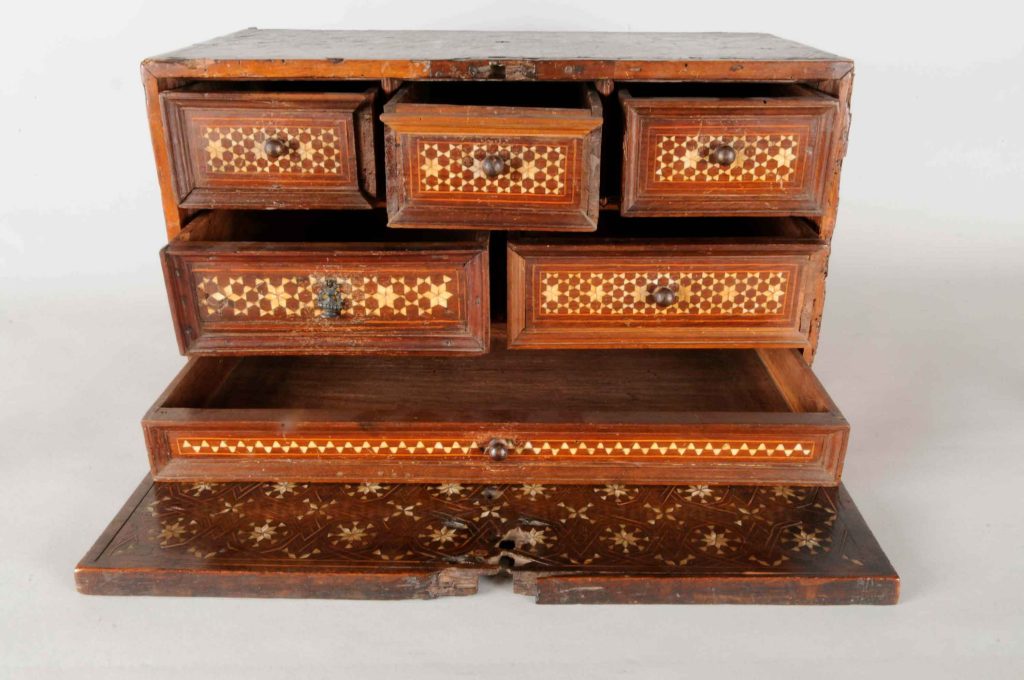
The Renaissance period saw the beginnings of the great modern states, such as Spain and France, with their increasingly complex administrative and civil service systems. Paper culture became widespread, and written documentation became ever more abundant and complex in the form of letters, wills, contracts and other notarial protocols. Pieces such as this one ,served as portable desks, with little drawers for keeping writing materials and other valuable objects.
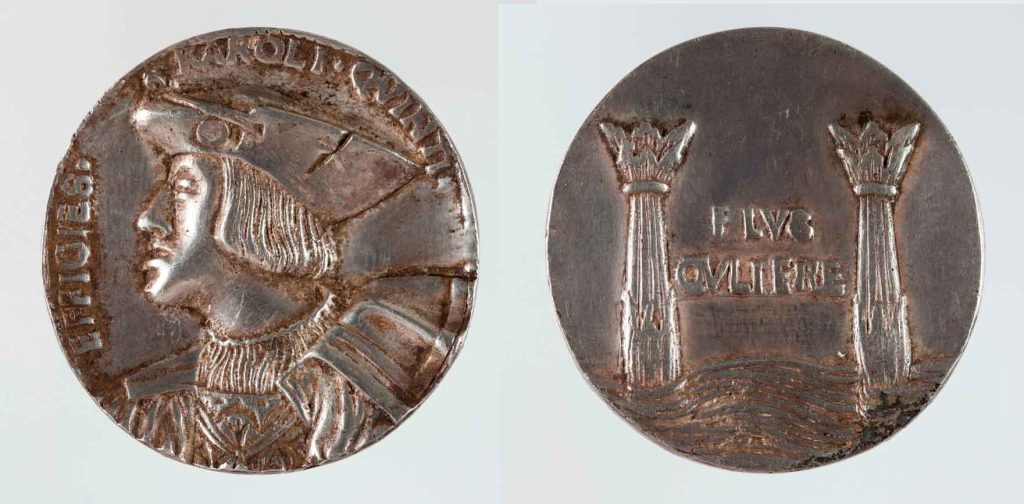
On this medal, we see the portrait of a very young Charles V, just twenty years old, shortly after being crowned king and standing in this palace for the first time, when he was on his way to Barcelona to take the oath of office in 1519. On 30 November of that year, it was here in this palace that the young king received the message confirming that he had been declared emperor in succession to his grandfather Maximilian I. The young king’s first stay resulted in the marriage of a captain of his guard, Juan de Zúñiga Avellaneda, to the young Estefania de Requesens, and years later the birth of their first son, Lluís de Requesens i de Zúñiga.
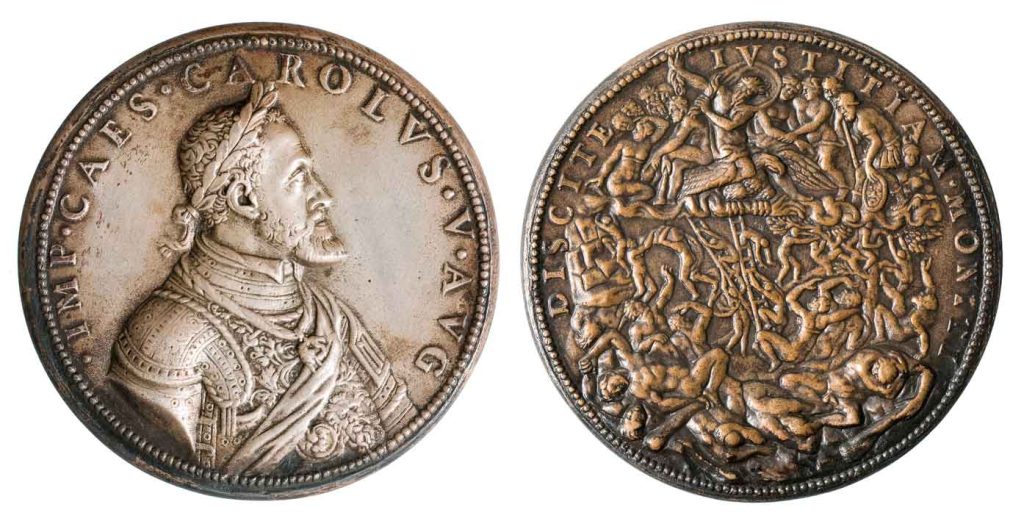
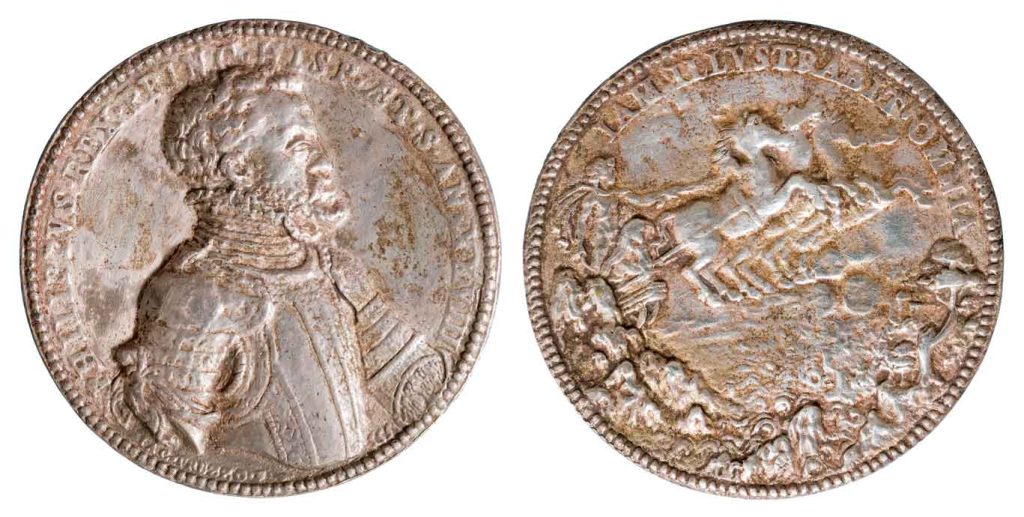
Charles V is depicted here at the age of almost fifty, wearing a cuirass and laurel wreath in the style of the great emperors of Rome. This medal commemorates the great victory of his troops over the Protestants of the Schmalkaldic League at the Battle of Mühlberg. You can see a 3D model of this piece, which can be enlarged and viewed from the back, where there is a complex composition rich in detail, with figures and actions that are a symbolic reminder of that historic event.
Philip II, sometimes known as Philip the Prudent, inherited an empire that was as immense as it was complex to administer and maintain from his father Charles V. This medal was made to commemorate the emperor's abdication in favour of his son. During his reign, Louis de Requesens, the prince's companion in his youth and formative years, was to assist him in the government of his empire, first as governor of the duchy of Milan, and then as governor of the Low Countries.
The Battle of Lepanto is considered one of the most important and decisive naval engagements in history, when some 212 ships of the Holy League faced more than 250 galleys and galliots of the Turkish Ottoman fleet on 7 October 1571. The defeat of the Turks, the almost total destruction of their fleet, and the loss of 30,000 lives finally brought a measure of tranquillity to the Mediterranean. Luis de Requesens took part in the battle and played a leading role under John of Austria.
We use cookies to improve your browsing experience, analyze web traffic, and personalize the content displayed. You can accept them all or configure them.
Functional
Always active
The storage or technical access is strictly necessary for the legitimate purpose of allowing the use of a certain service explicitly requested by the subscriber or user, or for the sole purpose of carrying out the transmission of a communication through an electronic communications network.
Preferences
Technical storage or access is necessary for the legitimate purpose of storing preferences that are not requested by the subscriber or user.
Statistics
Technical storage or access that is used exclusively for statistical purposes.Technical storage or access that is used exclusively for anonymous statistical purposes. Without a subpoena, voluntary compliance by your Internet service provider, or additional records from a third party, information stored or retrieved solely for this purpose cannot typically be used to identify you.
Màrqueting
L'emmagatzematge tècnic o l'accés són necessaris per crear perfils d'usuari per enviar publicitat o per fer un seguiment de l'usuari en un lloc web o en diversos llocs web amb finalitats de màrqueting similars.