A tour of the rooms of the Museu del Renaixement, the works on display and key themes
Walk through the museum rooms
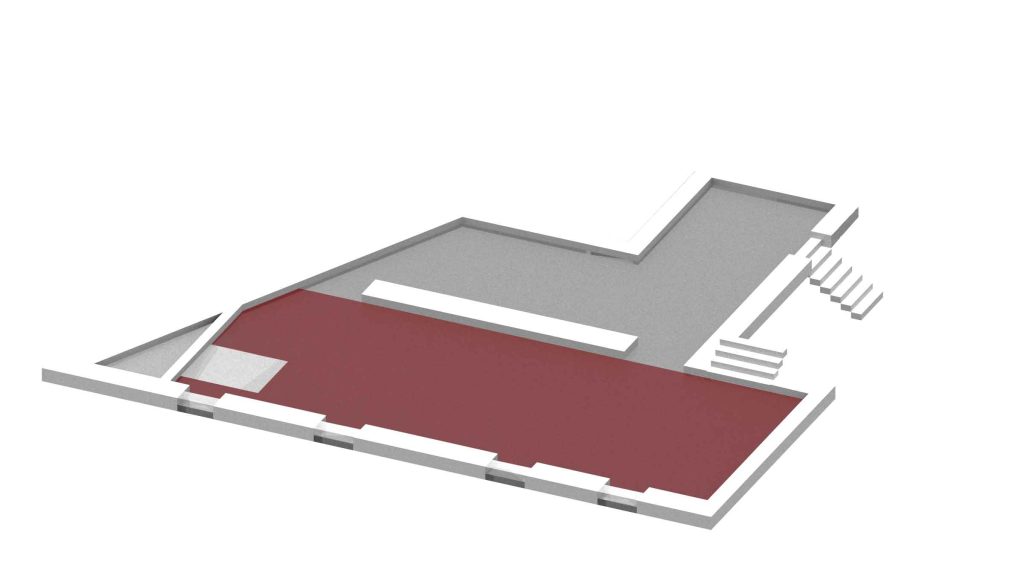
The story of the museum revolves around three key themes on each of the three floors: the history of the Requesens family in Molins de Rei, the principal characteristics of Renaissance art, and everyday life in the 16th century.
Despite the importance of classical culture and Greco-Roman mythology and the increasingly common use of classical orders in architecture, Renaissance art remained eminently Christian. It was no surprise that it was in the religious context that the greatest volume of, and need for, commissioned works of art was concentrated. And one of the themes most commonly represented were the various episodes in the life of Christ.
Art. The most frequently depicted themes and the flow of models
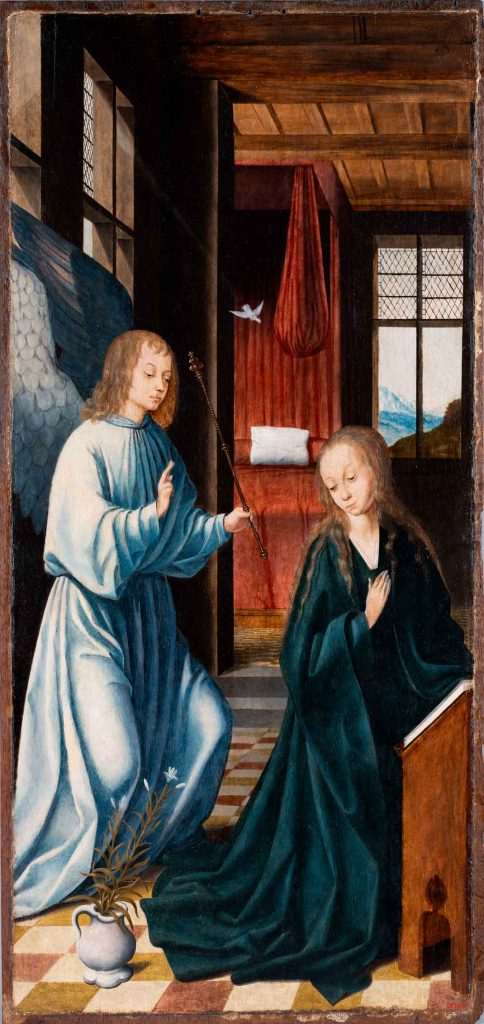
This panel painting, of Flemish school, depicts the Annunciation unfolding inside a room with large windows. The young woman, who had been reading moments before, receives the surprising and unexpected visit of the angel Gabriel, who announces the good news of her pregnancy, to which she responds with a gesture of serene acceptance, her hand resting on her chest. The painting was likely part of a set with the following work, of identical size, format, and style.
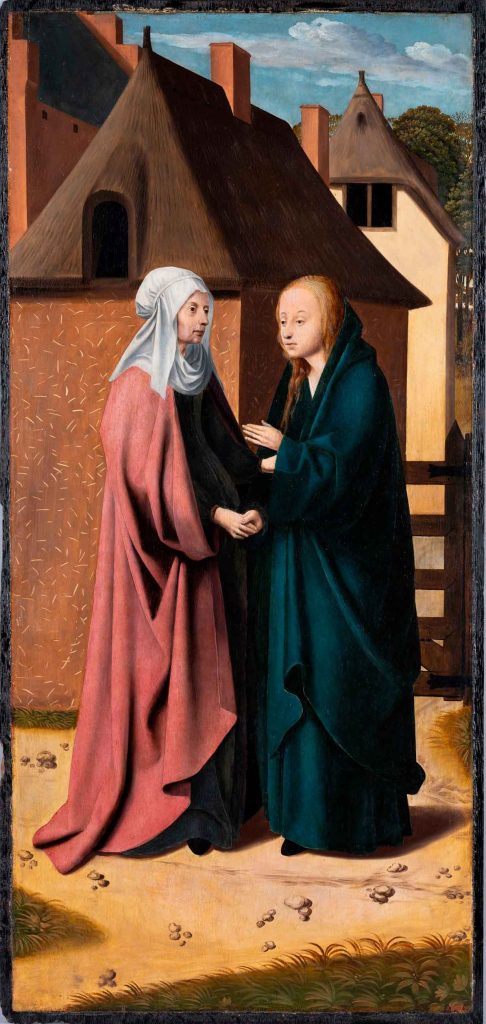
One of the episodes immediately following the Annunciation is the Visitation. When the young Mary, aware of the news of her pregnancy, went to visit her cousin Elizabeth, who was also miraculously expecting a child. The meeting of the two women in an open space in the village foreshadows, in a way, the encounter between Jesus and his cousin, John the Baptist. Mary stayed with her cousin for three months, until the birth of her son.
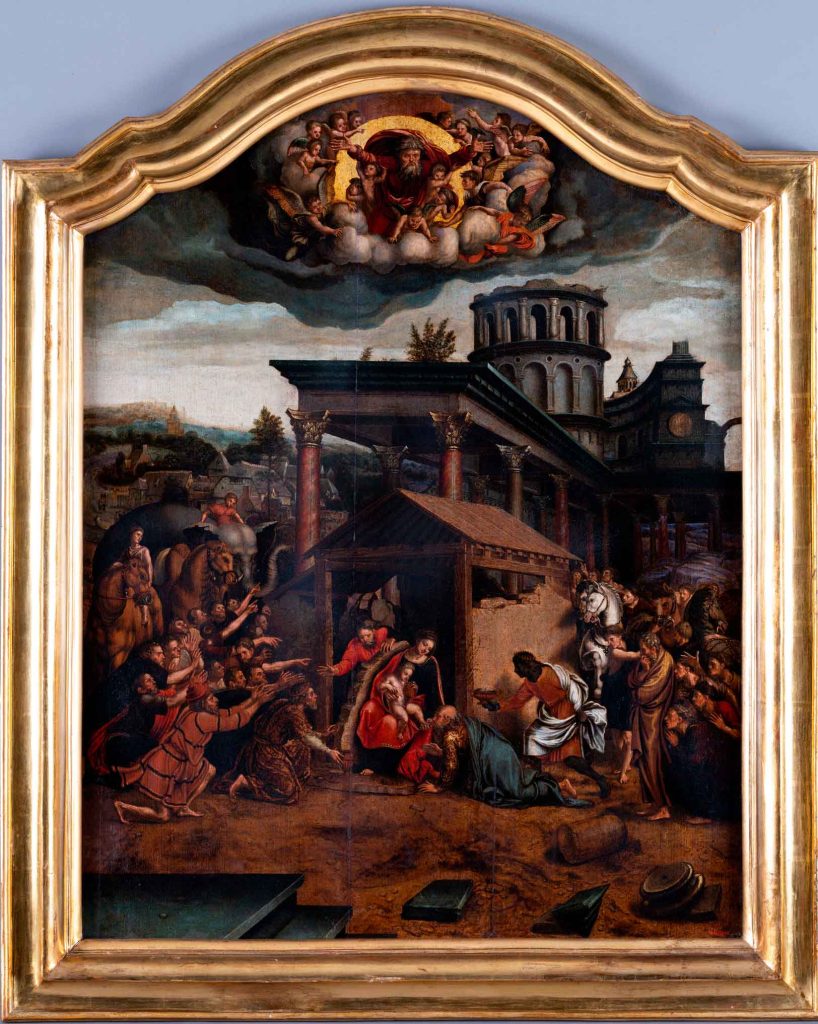
Strictly speaking, from an etymological point of view, an epiphany is a manifestation; the visualisation of a presence, of a truth of a higher order. According to the New Testament, the birth of Jesus and the subsequent arrival of three kings or wise men from the East to visit him signified the recognition of the birth of the messiah. The composition of the scene is rich and complex, with an abundance of classicist architectural elements, many of which are in ruins. The image of God in flight, very similar to the same figure painted in a very similar position by Michelangelo on the ceiling of the Sistine Chapel in Rome, is significant.
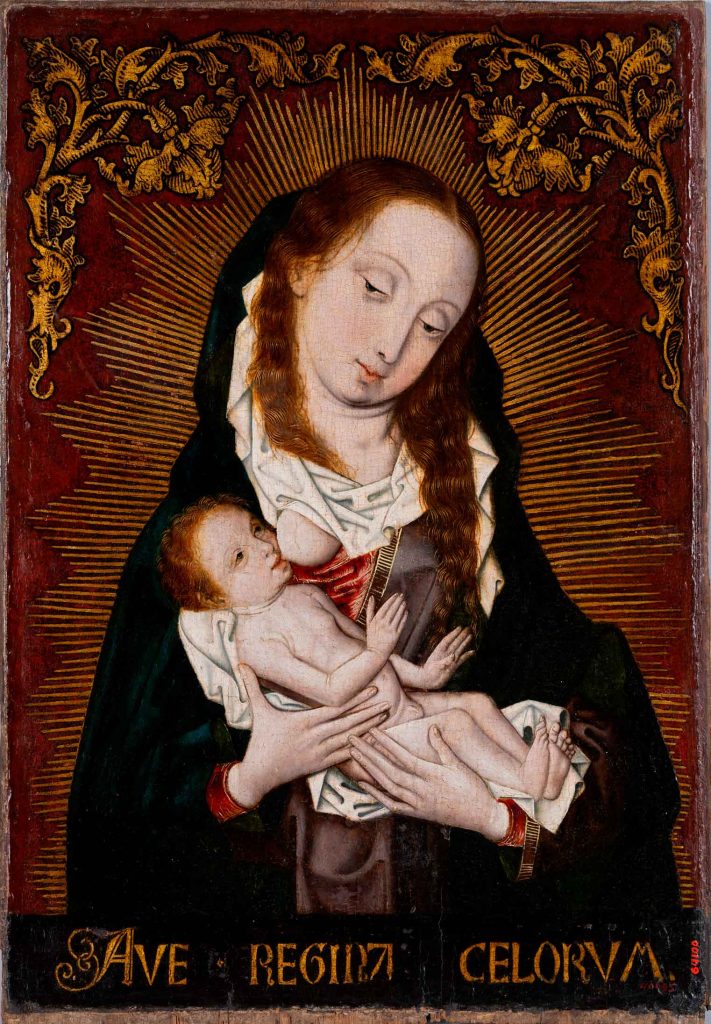
This type of depiction of the Virgin Mary breastfeeding her child was very popular in the late Gothic period and also during the Renaissance. However, following the Council of Trent in 1563, this representation of the Virgin was greatly restricted for reasons of modesty, so as not to show her exposed breast.
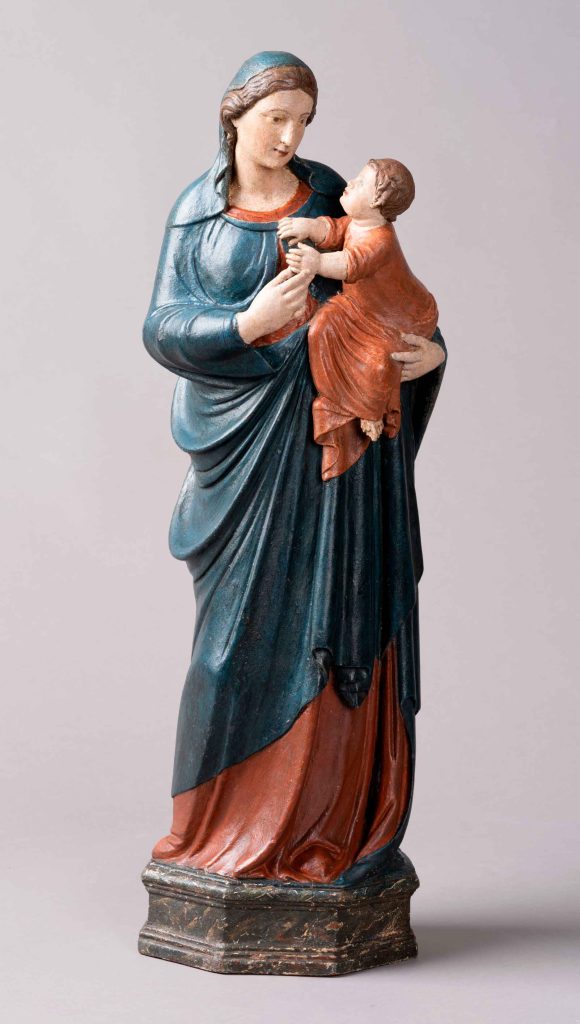
Trapani is a Sicilian city that became especially famous for the spread of a 14th-century image of the Virgin and Child, which eventually developed its own iconography. In this case, it is a polychrome wooden work, easily recognizable, among other things, by the two figures, the affectionate relationship between them, and also by the two characteristic parallel folds that the tunic forms on one side.
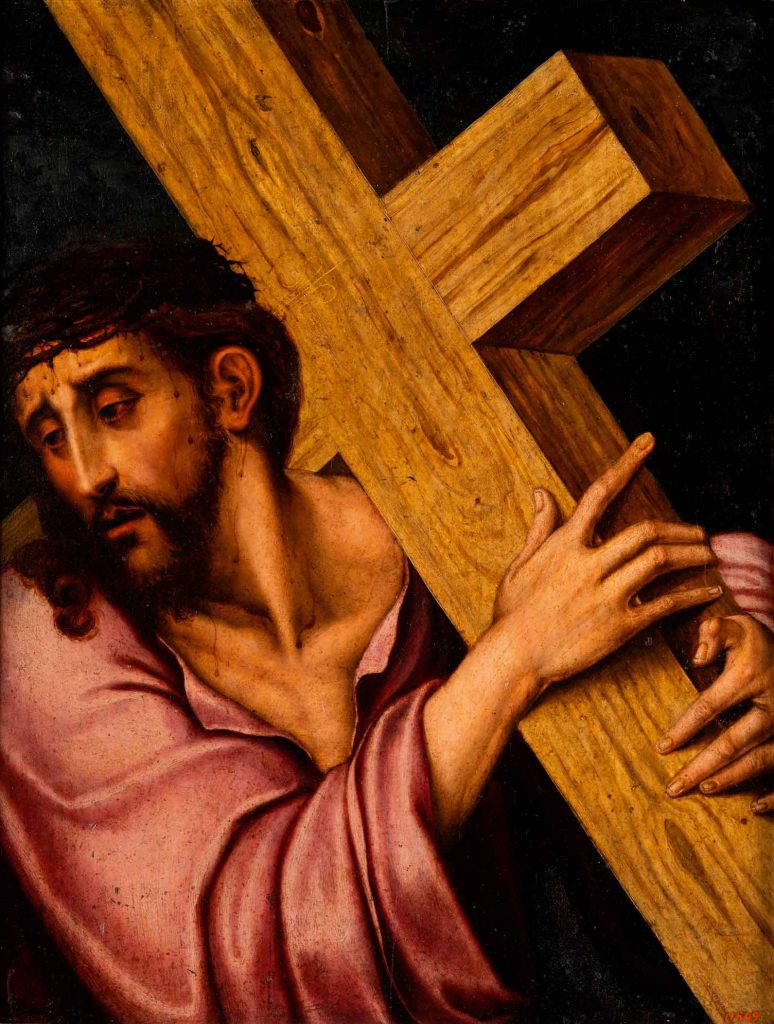
Luis de Morales was a Spanish painter born in Badajoz. In his work, with its elongated figures and delicate modulations of colour and shadow, he used the sfumato technique pioneered by Leonardo da Vinci that was very popular. Due to this great success and the religious subject matter of his works, he became known during his lifetime as ‘El Divino Morales’.
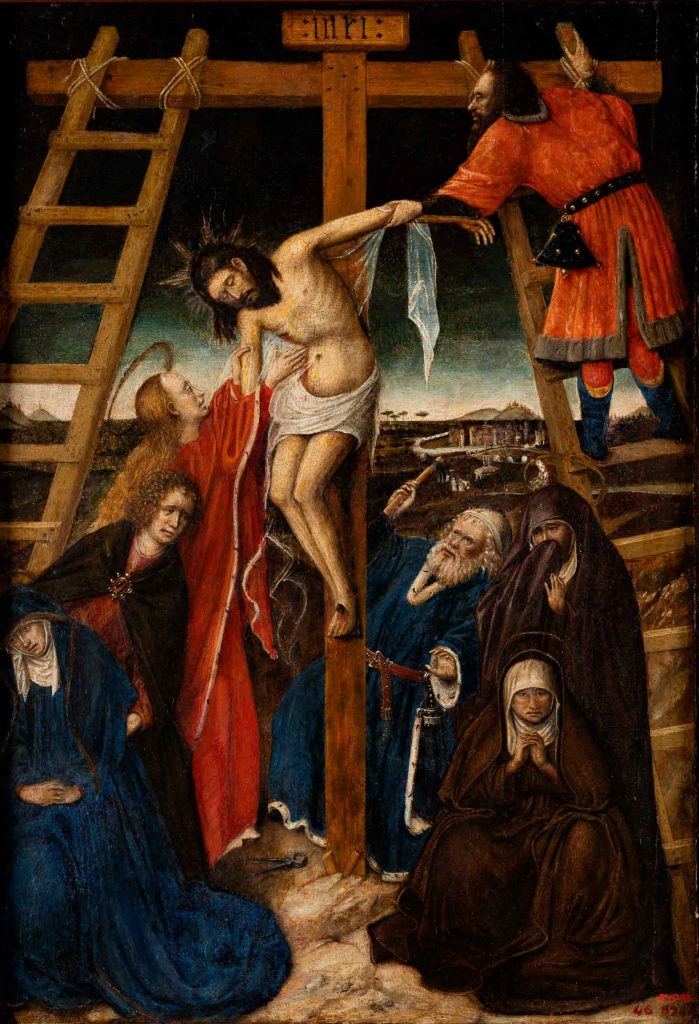
This painting is extremely interesting from a stylistic point of view. The figures are distributed within the pictorial space in a very well thought-out manner, taking advantage of the axis of symmetry generated by the cross and the two ladders, at the precise moment when Jesus' body is lowered. The meticulous rendering of detail and the opening onto a background showing a landscape that fades away into the horizon, as well as the clothing, the faces of the figures and the drama with which some of them are portrayed, are a good example of the great pictorial quality of this painting.
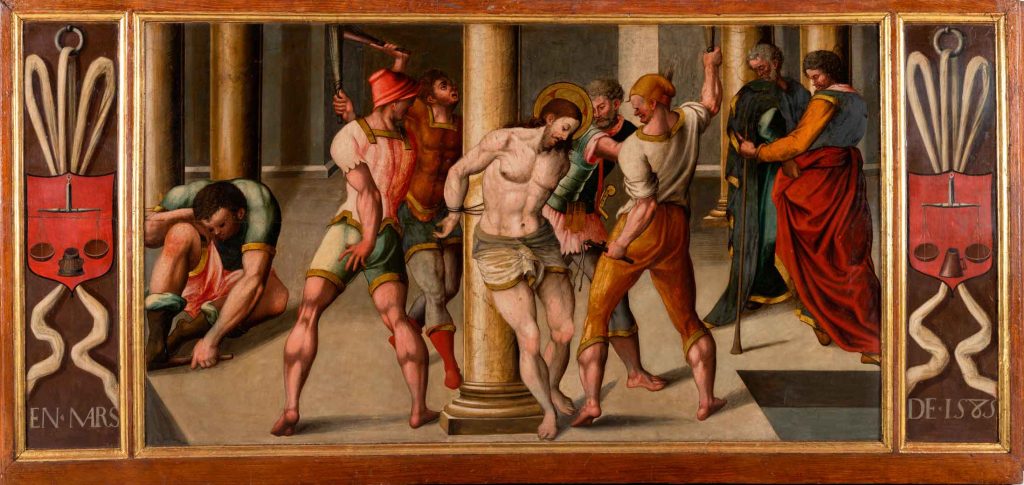
The unusual horizontal format of this panel painting is explained by the fact that it originally served to decorate the front of an altar. The scene of the Flagellation of Christ takes place inside a space that is simple yet classical in style, dominated by the metallic tones of some garments and by the treatment of the figures and anatomies, which vary in quality. It comes from the Barcelona church of Santa Maria del Pi, specifically from the Chapel of Saint Michael, which belonged to the city’s former Guild of Shopkeepers. Its motto, along with the date, appears on the sides of the piece.
Anon. Catalonia
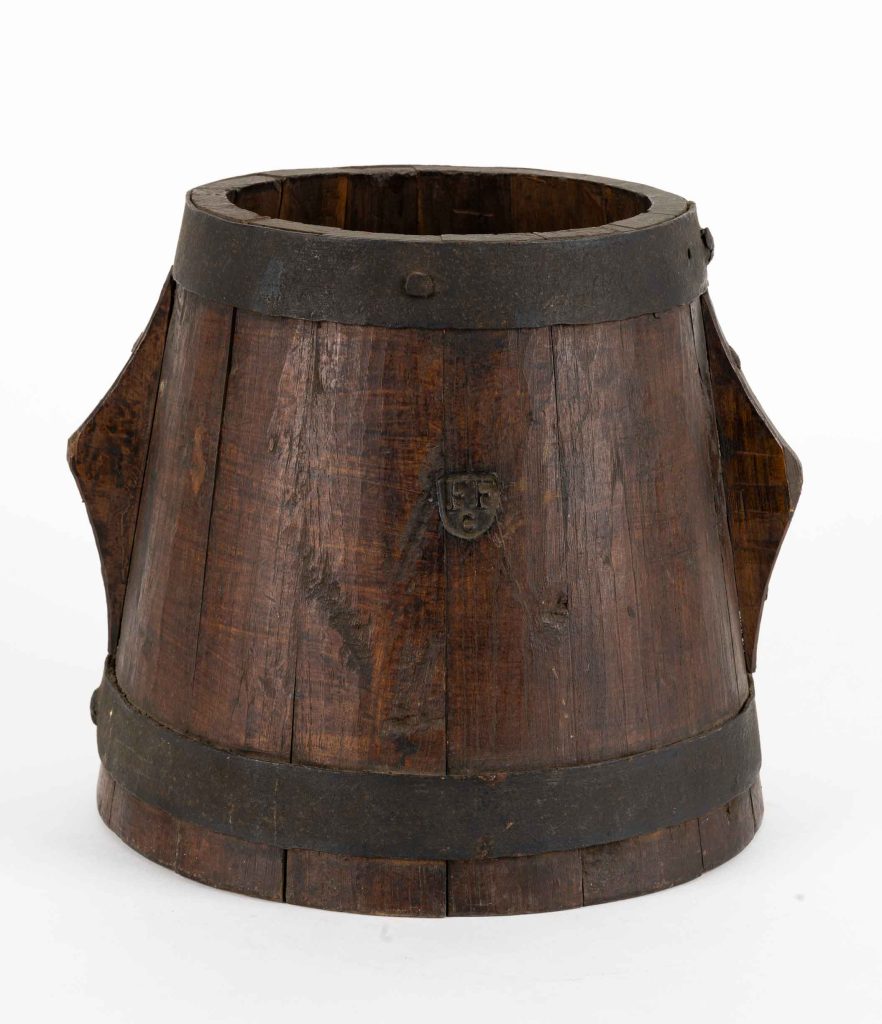
Scales for nuts and dried fruit, wood and metal, 1572 Barcelona History Museum MHCB 2933
Very similar to those that appear in the painting of the Scourging of Christ, these quarteres [scales] are used for measuring quantities of nuts and dried fruit to be bought or sold. Quarteres were very common at the time, and were subject to strict legislation to prevent malpractice. The coat of arms of the city of Barcelona can be clearly seen, attesting to its official status.
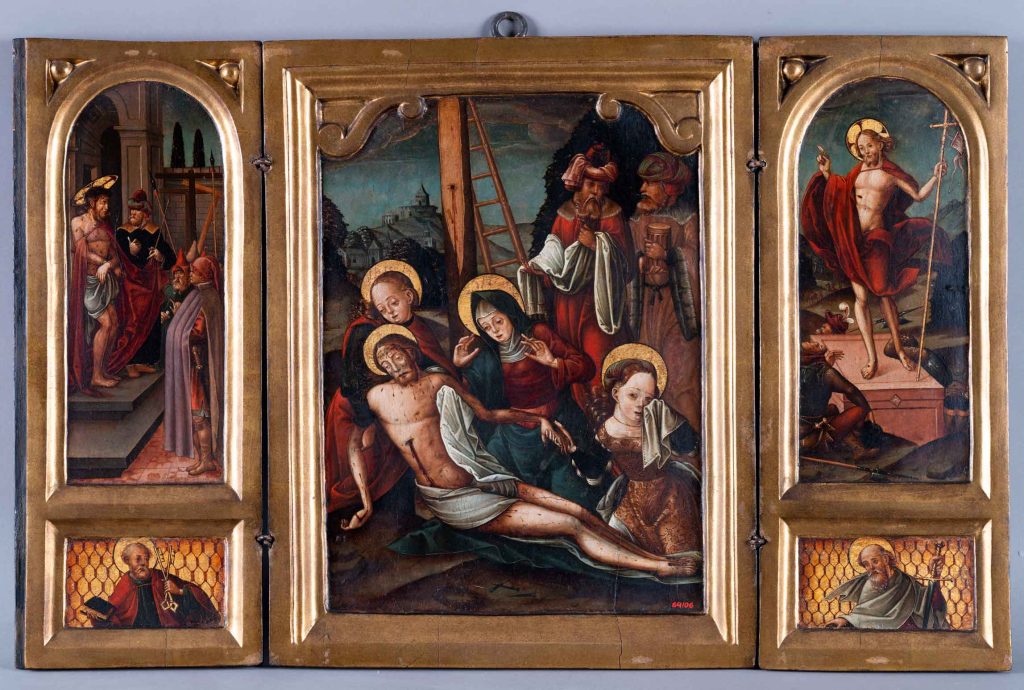
This small triptych was likely intended for private use. When the doors are closed, a scene painted in grisaille can be seen on the outside: the Expulsion from Paradise. It is noteworthy that this composition literally copies a print of the same subject by Albrecht Dürer, one of the great artists of the Renaissance. In this regard, it is important to highlight the role that prints played in the circulation and dissemination of Renaissance models throughout Europe in general and in Catalonia in particular.
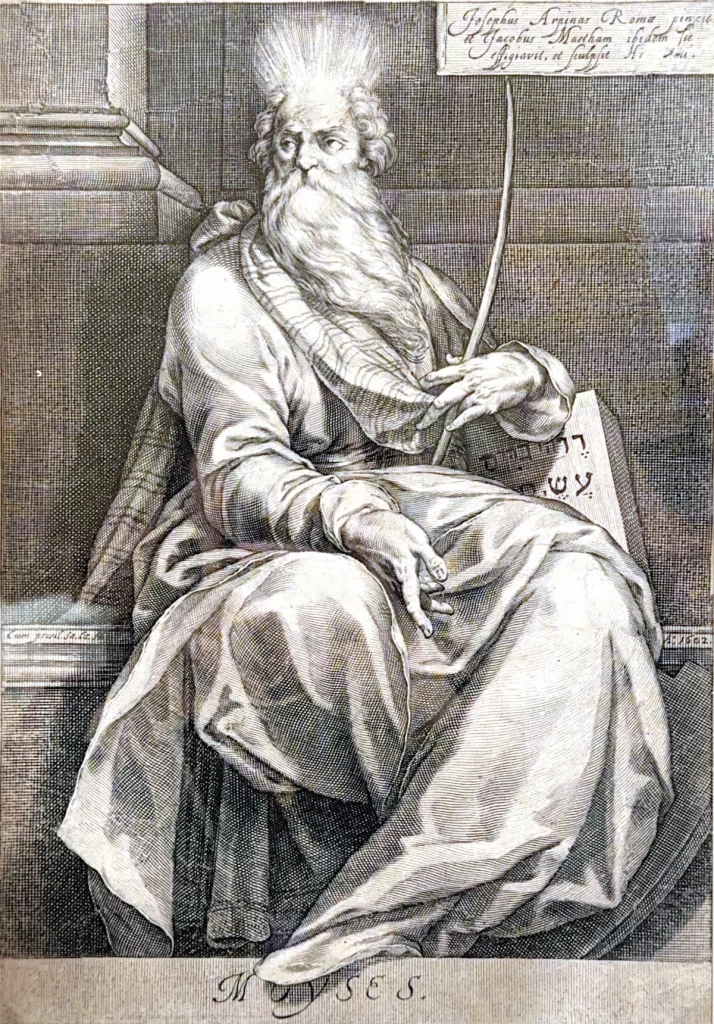
Jacob Matham
Moses, 1602, engraving
Museu de Lleida – Antoni Gelonch Deposit
GE-838
Jacob Matham was a Flemish engraver and draftsman active in the late 16th and early 17th centuries. Together with his stepfather and master, Hendrick Goltzius, he worked in the city of Haarlem producing engravings based on works by several renowned artists. This Moses, after a painting by the Cavaliere d’Arpino and reminiscent of Michelangelo’s famous depiction, is a fine example of his skill.
.
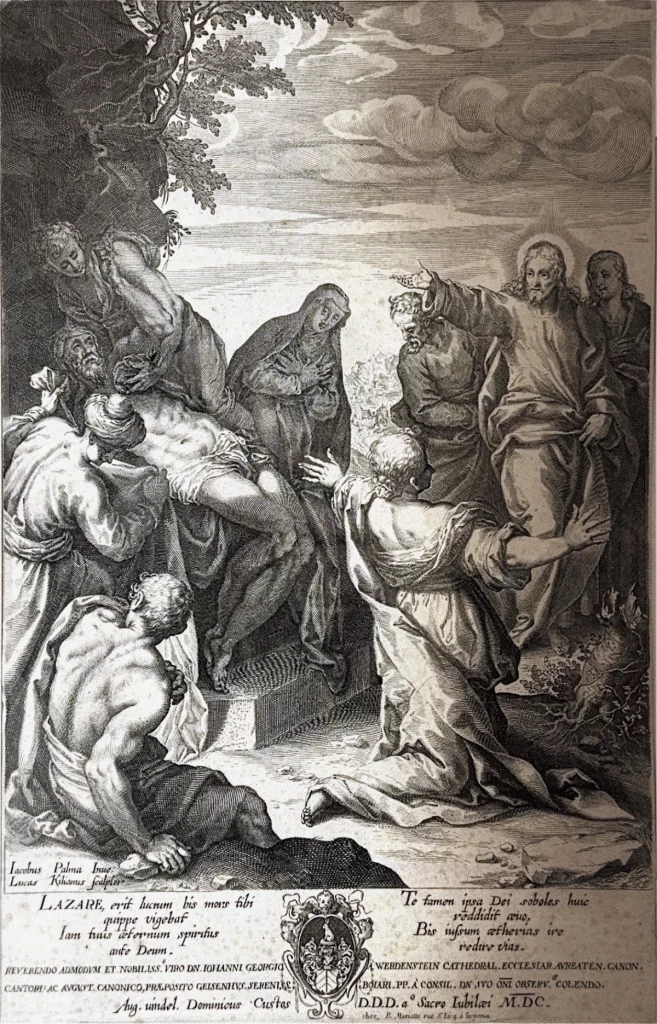
Lucas Kilian
The Resurrection of Lazarus, c. 1600, engraving
Museu de Lleida – Antoni Gelonch Deposit
GE-835
The famous episode of the Resurrection of Lazarus, in the presence of his sisters Martha and Mary, is the subject of this engraving, whose composition follows an Italian painting of the same theme. Kilian depicts with great drama the moment when Lazarus is drawn from the tomb, just as Jesus, standing opposite, commands him to rise and walk.
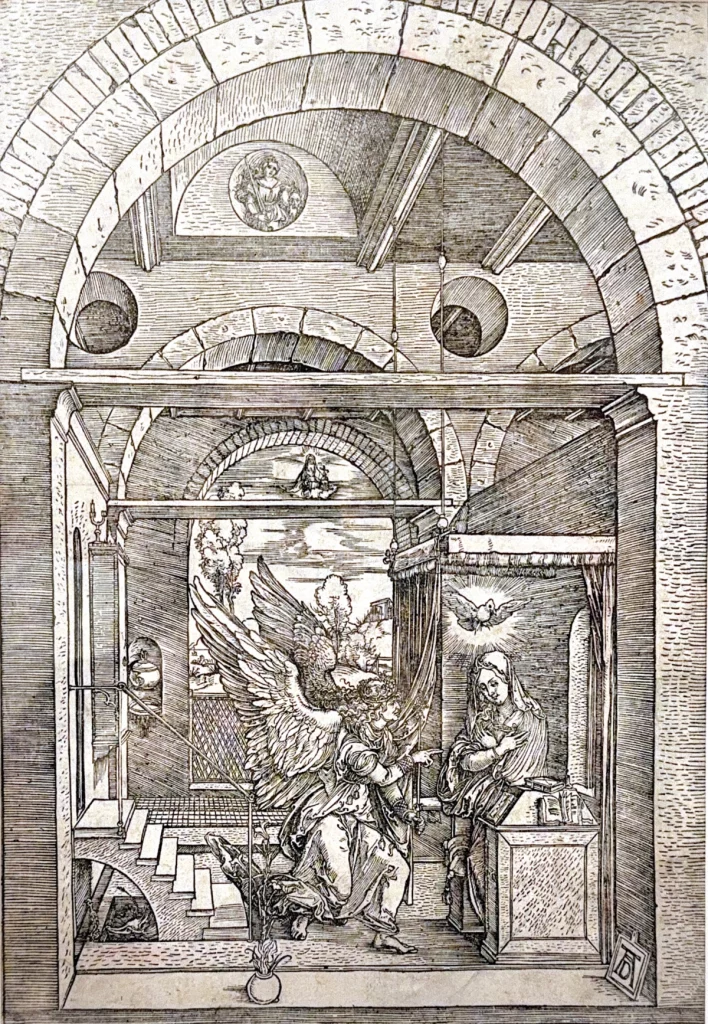
Albrecht Dürer
The Annunciation 1504, engraving
Museu de Lleida – Antoni Gelonch Deposit
GE-760
Albrecht Dürer, the most important artist of the German Renaissance, produced between 1500 and 1511 a woodcut series of 16 engravings on the life of the Virgin. In many of them, as in this one, architecture plays a central role in structuring the scene. Here the Annunciation unfolds within a complex and finely detailed interior, both in form and materials. In the foreground, the vase with lilies almost shares prominence with the artist’s signature.
.
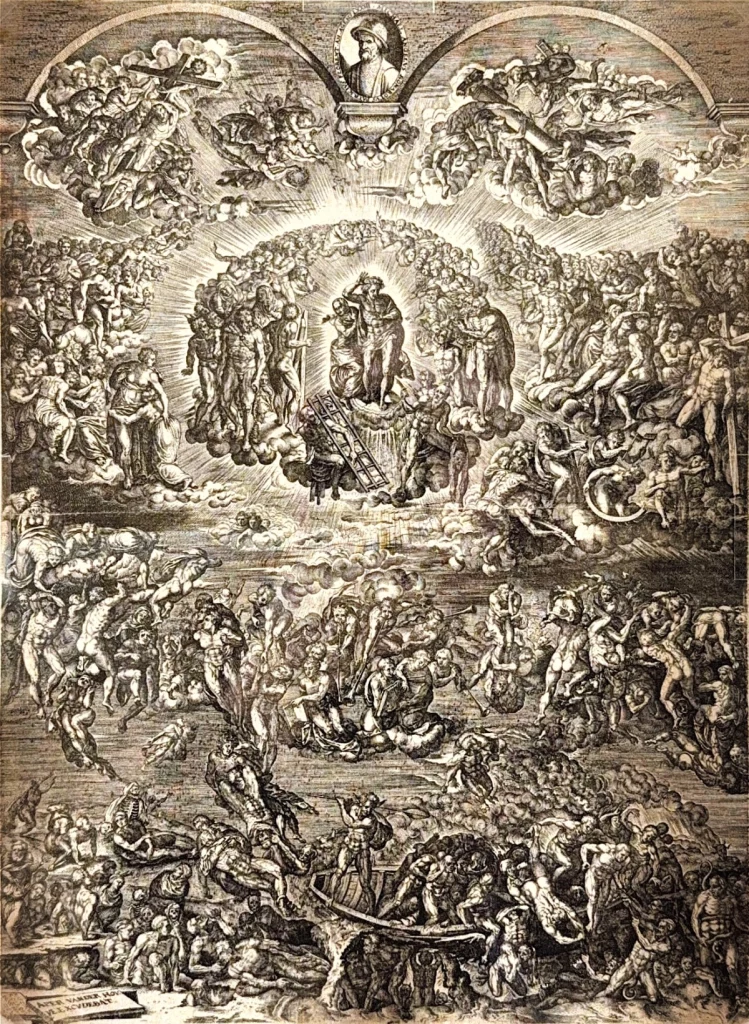
Jan Wierix
The Last Judgement, c. 1590, engraving
Museu de Lleida – Antoni Gelonch Deposit
GE-813
Michelangelo completed the Last Judgement on the apse wall of the Sistine Chapel, one of the masterpieces of the Italian Renaissance, in 1541. The fresco quickly became famous, thanks in part to the circulation of engravings like this one by Jan Wierix, which reproduces the original with remarkable quality and detail—though without the strength of its colour.
Entrades recents
Comentaris recents
No s'han trobat comentaris.
Press Enter / Return to begin your search.
Have an Account?
To keep connected with us please login with your personal info.
We use cookies to improve your browsing experience, analyze web traffic, and personalize the content displayed. You can accept them all or configure them.
Functional
Always active
The storage or technical access is strictly necessary for the legitimate purpose of allowing the use of a certain service explicitly requested by the subscriber or user, or for the sole purpose of carrying out the transmission of a communication through an electronic communications network.
Preferences
Technical storage or access is necessary for the legitimate purpose of storing preferences that are not requested by the subscriber or user.
Statistics
Technical storage or access that is used exclusively for statistical purposes.Technical storage or access that is used exclusively for anonymous statistical purposes. Without a subpoena, voluntary compliance by your Internet service provider, or additional records from a third party, information stored or retrieved solely for this purpose cannot typically be used to identify you.
Màrqueting
L'emmagatzematge tècnic o l'accés són necessaris per crear perfils d'usuari per enviar publicitat o per fer un seguiment de l'usuari en un lloc web o en diversos llocs web amb finalitats de màrqueting similars.