A tour of the rooms of the Museu del Renaixement, the works on display and key themes
Walk through the museum rooms
The story of the museum revolves around three key themes on each of the three floors: the history of the Requesens family in Molins de Rei, the principal characteristics of Renaissance art, and everyday life in the 16th century.
The Renaissance was characterised by the revival of classical Greek and Roman culture in art, and also in poetry, philosophy and other areas of culture as well humanism. However, it was also a period of innovations that had a huge impact on the renewal of figurative language and style. The invention of perspective, the use of oil paint and naturalism are three examples of this renewal, which gradually gained ground.
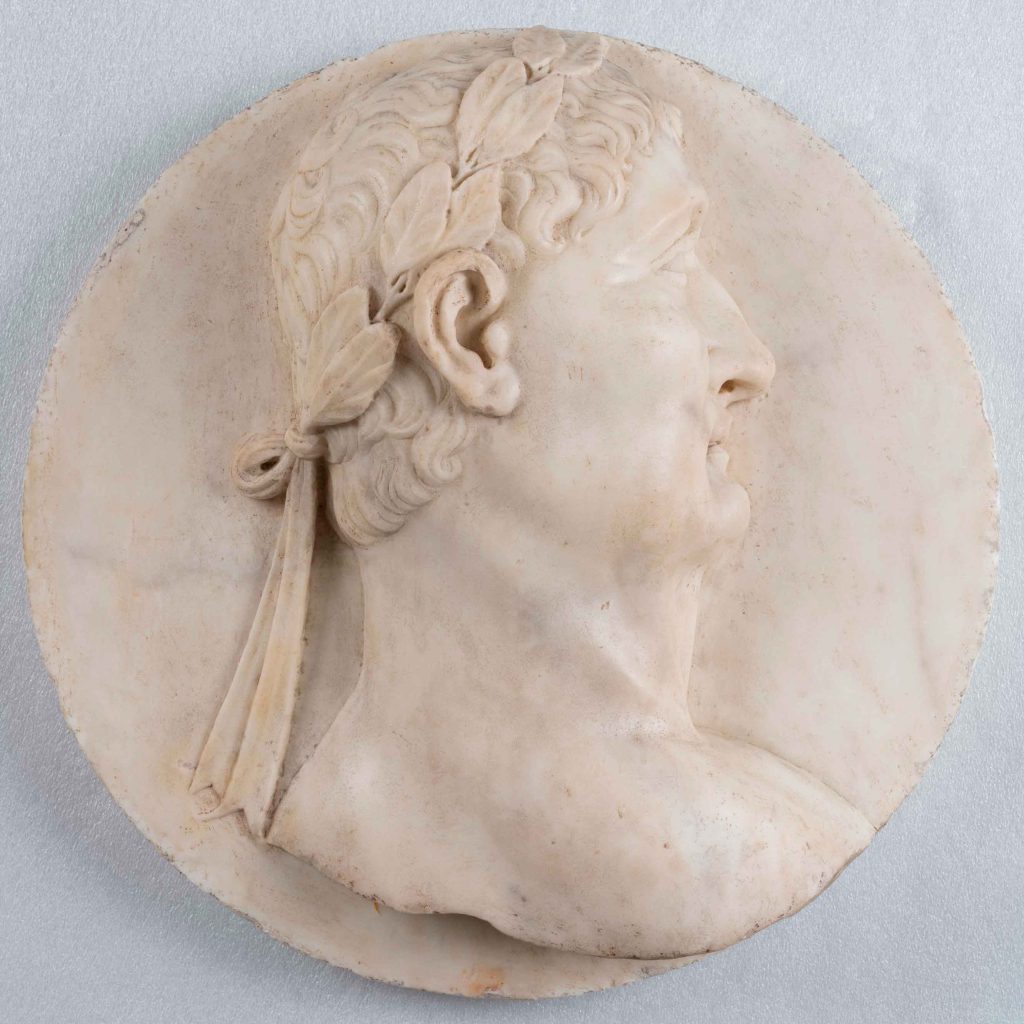
This marble medallion, together with the other three displayed at the Museum of the Renaissance, dates from the 16th century and was part of the collection that the humanist Miquel Mai acquired in Italy to decorate his house in Barcelona, at Plaça de la Cucurulla. Mai had served as ambassador of Charles V in Rome from 1528, where he had access to the most advanced cultural environment of the time and was able to acquire a large number of books and works of art.
Vespasian and Trajan were not the only emperors who were form part of the decoration of Miquel Mai's house. We know from inventories and old descriptions that the collection of medallions in this series in his house in Barcelona was much more extensive, as is evidenced by the diversity of examples that have been preserved. We also know that Mai had a spectacular collection of works of art and books in his house. With more than 2,000 volumes, his library was probably one of the most important in Barcelona.
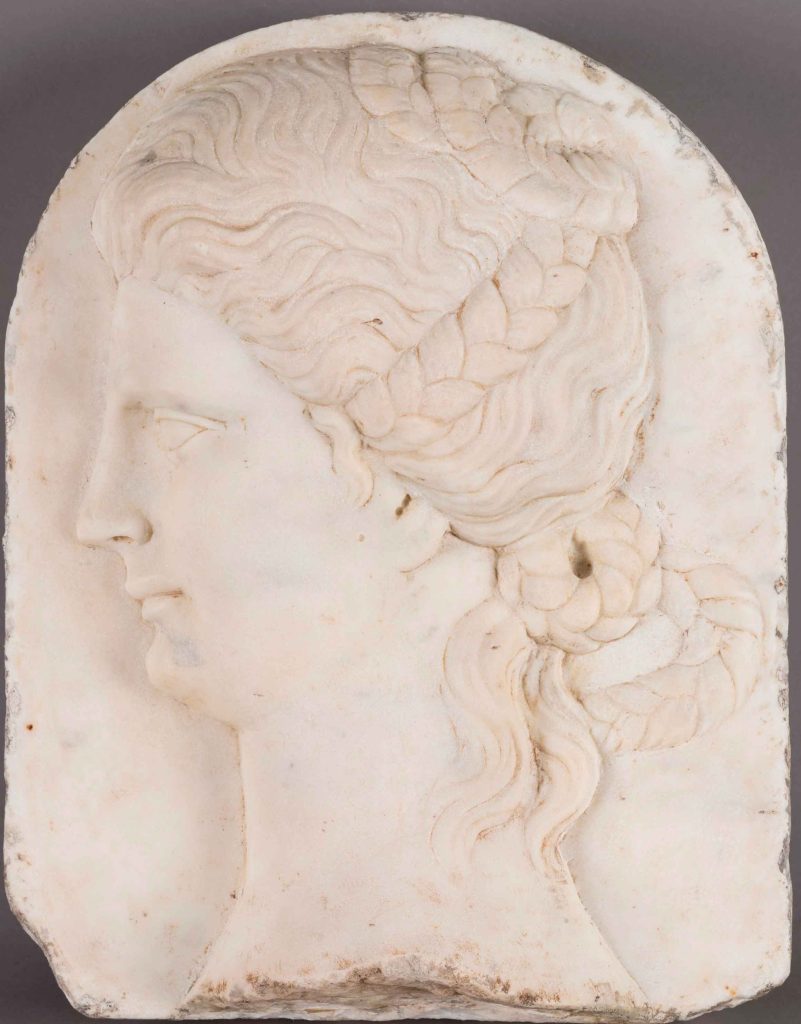
Annia Galeria Faustina (2nd century AD), also known as Faustina Major, married Antoninus Pius before he became emperor. When she died, at only 37 years old, the emperor deeply mourned her loss and asked the Senate to deify her. Her face became a very common motif in decorations and coins.
The shape of the reliefs depicting female figures that decorated Miquel Mai’s house is very different from that of the ones that depict emperors. Instead of being round, the reliefs representing the empresses are niche-shaped and much smaller, but equally delicate in the way they were made. It is likely that there was some kind of alternation, or that the location conditioned the format. Faustina Minor was the daughter of the emperor Antoni Pius and Ànnia Galeria Faustina, and she married the Emperor Marcus Aurelius. She died in 175 AD.
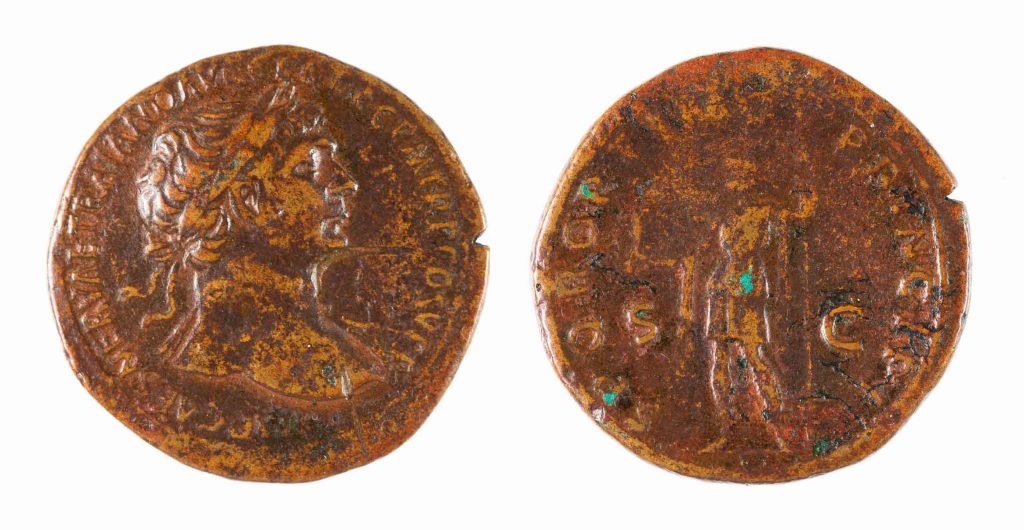
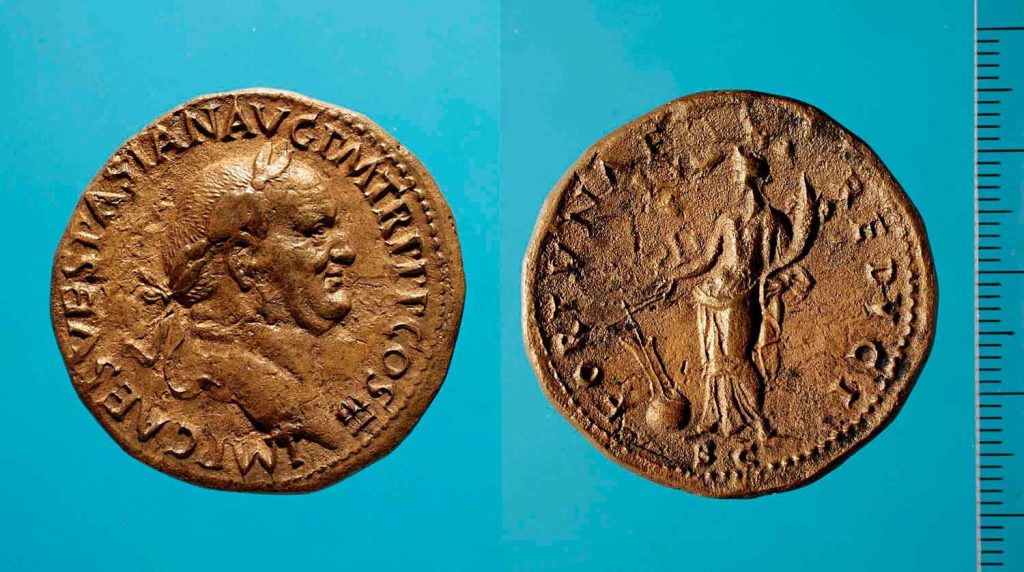
Numismatics is a very important source of information. In this case, it also allows us to appreciate the resemblance between the figure depicted on the coin (contemporary to the period of the person portrayed) and his representation in the 16th-century marble medallions. One of the defining features of Renaissance art, in the realm of portraiture, was its aim to be faithful and realistic.
Ancient Rome has bequeathed us numerous images and representations of the people who played a leading role in its political life. Primarily thanks to the sculptures and coins, we know what the emperors and empresses looked like. This sesterce, together with the other three coins on display in the museum, and the medallions carved in marble, allow us to appreciate the similarities between works separated by a period of almost fifteen centuries.
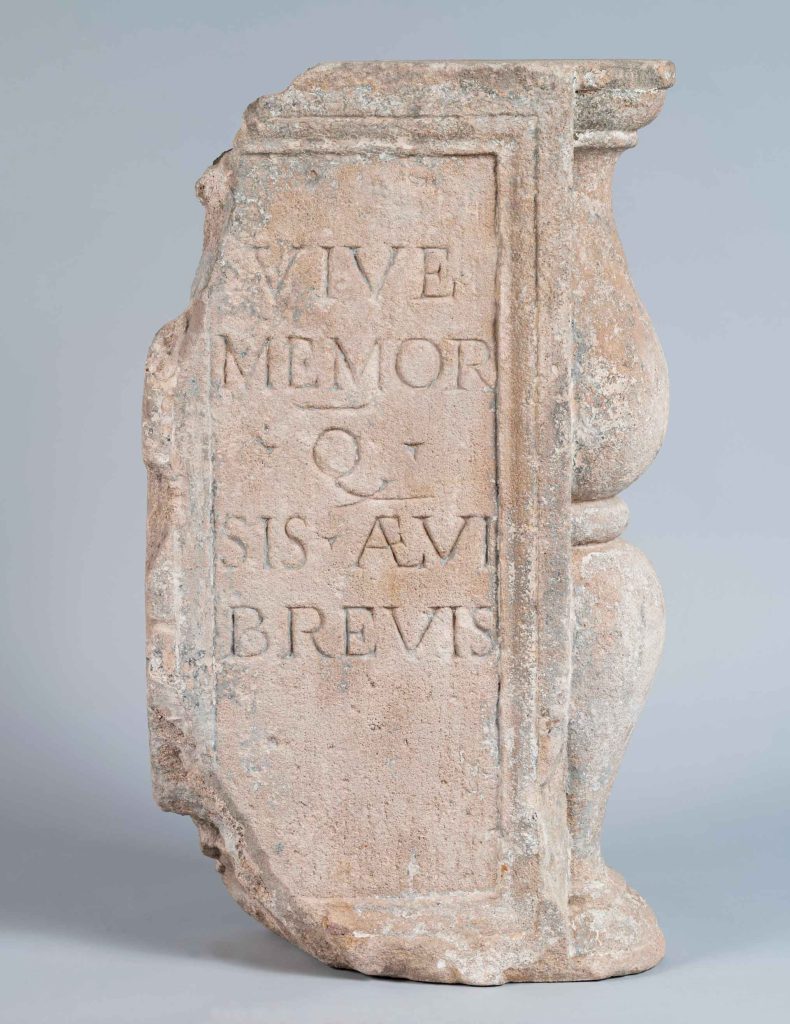
The baluster is an architectural feature that has its origins in the Renaissance, especially in Venetian and Veronese palaces, and one that soon became very popular everywhere. Along with other similar elements, this balustrade pilaster probably formed part of the balustrade of a balcony or courtyard of a Barcelona house. Of particular note is the epigraphic inscription inside, which reproduces a verse by the poet Horace: “Remember that life is short”.
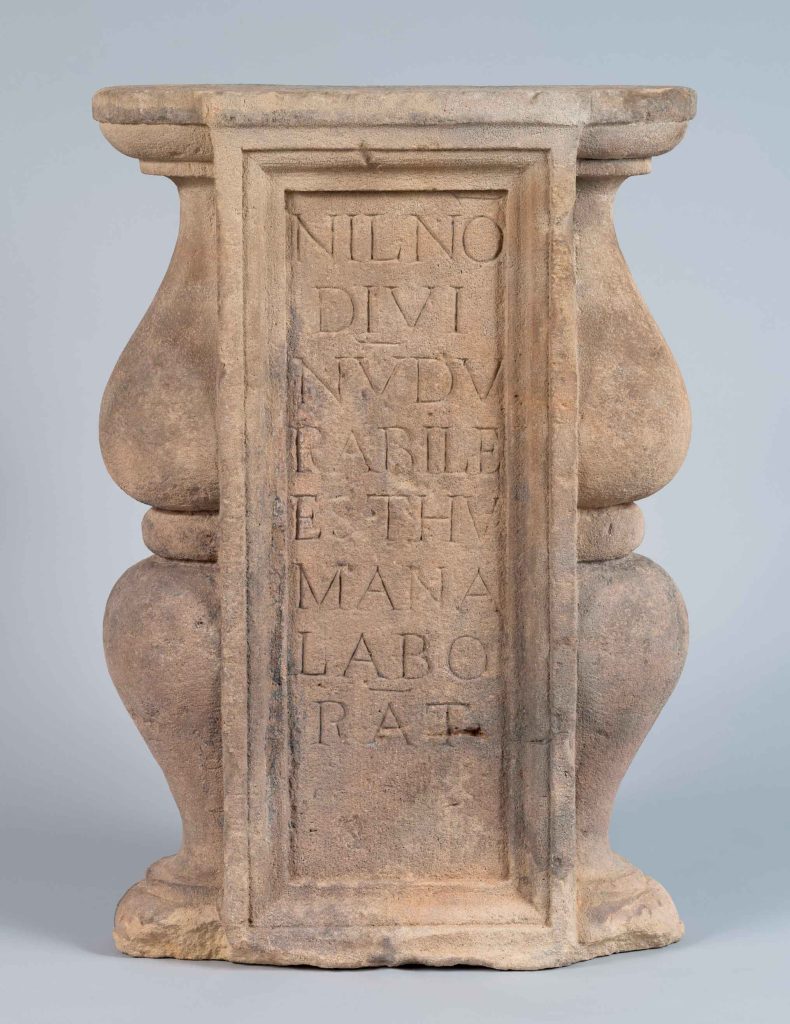
This balustrade pilaster, which must have formed part of the same ensemble as the previous one, bears another epigraphic inscription by the poet Horace, in this case a warning to the creative genius: “No work of man is equal to the work of divinity”. This type of Roman-style decoration could be integrated into architecture with the classical orders. However, their introduction in Catalonia was not always rigorous from a theoretical point of view.
Spain or Italy
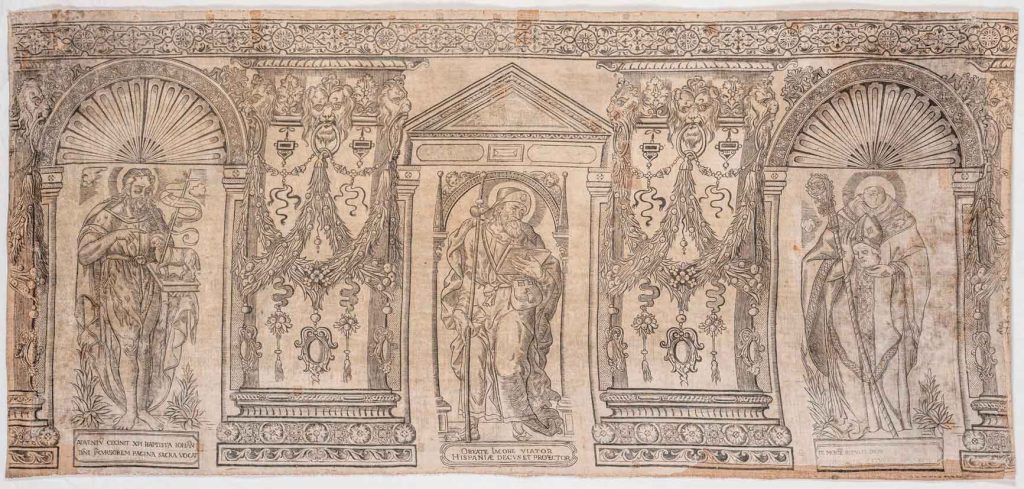
Altar frontal, 16th-17th century, linen printed using wooden moulds, with some parts retouched in pencil Terrassa Textile Museum, Ricard Viñas Geis collection N.R. 6471
One of the characteristic features of the Renaissance is the use of the classical orders: Doric, Ionic, Corinthian, as well as the Tuscan and Composite, the grotesque and shell-shaped niches. Architectural theorists, such as Sebastiano Serlio, recovered ancient treatises such as Vitruvi's Ten Books of Architecture, and interpreted them in a way adapted to their own time. For example, the orders of architecture would be assigned to certain uses, figures and saints on the basis of their proportions and the type of ornamentation. Deu llibres d’arquitectura, de Vitruvi, i en faran una lectura moderna, adaptada al seu temps. Per exemple, s’assignaran els diversos ordres arquitectònics, en funció de les seves proporcions i del tipus d’ornamentació, a determinats usos, personatges i sants, masculins o femenins.
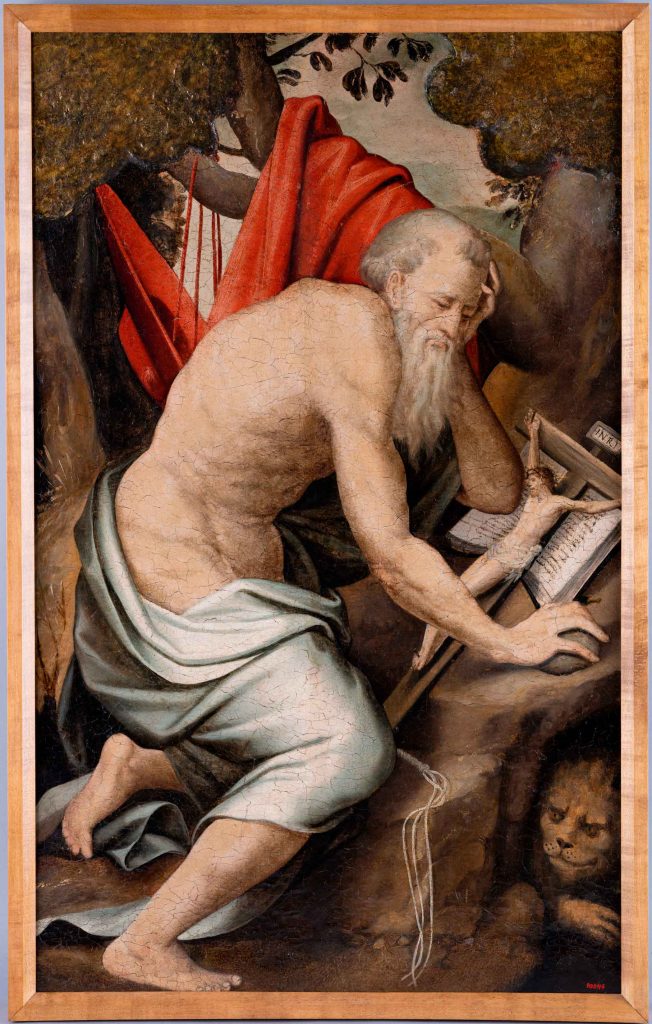
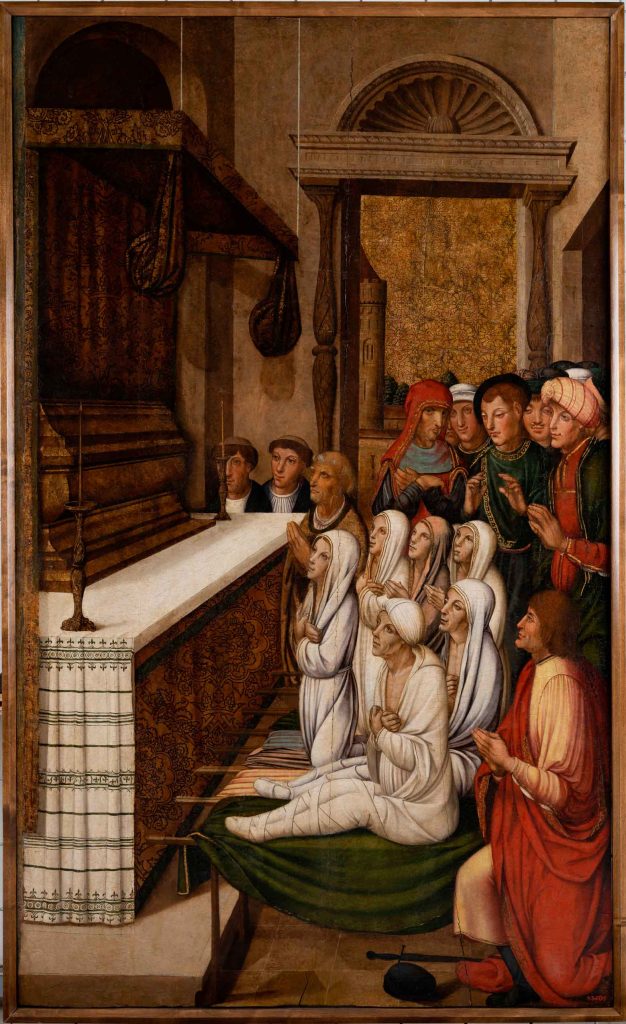
One of the principle technical innovations in Renaissance painting was the use of oil as a binder for the pigment. This made great richness in terms of nuance, tonal gradation and shading possible, thus helping to achieve the goal of being able to create more realistic art. Although painting might still contain complex iconographies and hidden meanings, it was no longer understood in a symbolic way, but as an open window.
Another major innovation of Renaissance painting, already initiated in the medieval period but reaching a high theoretical refinement in the 15th century, was the invention of linear perspective—that is, the method of creating the illusion of spatial depth on the flat surface of a painting. This effect, achieved by properly arranging the convergence of straight lines of objects and architecture in relation to the viewer’s point of view and the vanishing point, became increasingly common in compositions.
Sometimes, as in this case, in a not very effective way.
.
Italy
Towel, 15th-16th century, linen taffeta decorated with silk. Terrassa Textile Museum, Josep Biosca Torres N.R. 434
This towel, dating from the 15th–16th centuries, is of Italian origin. It features decoration composed of animal, abstract, and geometric motifs.
Sculptures in polychromed wood, often gilded, as is the case here, were very common at the time. These two figures, dramatically expressive and in movement, should be understood as part of a larger ensemble that has not survived, probably with other similar figures weeping before the body of someone who had died.
.
Entrades recents
Comentaris recents
No s'han trobat comentaris.
Press Enter / Return to begin your search.
Have an Account?
To keep connected with us please login with your personal info.
We use cookies to improve your browsing experience, analyze web traffic, and personalize the content displayed. You can accept them all or configure them.
Functional
Always active
The storage or technical access is strictly necessary for the legitimate purpose of allowing the use of a certain service explicitly requested by the subscriber or user, or for the sole purpose of carrying out the transmission of a communication through an electronic communications network.
Preferences
Technical storage or access is necessary for the legitimate purpose of storing preferences that are not requested by the subscriber or user.
Statistics
Technical storage or access that is used exclusively for statistical purposes.Technical storage or access that is used exclusively for anonymous statistical purposes. Without a subpoena, voluntary compliance by your Internet service provider, or additional records from a third party, information stored or retrieved solely for this purpose cannot typically be used to identify you.
Màrqueting
L'emmagatzematge tècnic o l'accés són necessaris per crear perfils d'usuari per enviar publicitat o per fer un seguiment de l'usuari en un lloc web o en diversos llocs web amb finalitats de màrqueting similars.